


 Ah, it was great to be home with family again!
Adventures of an Imperfect Man In Search of a Handmade Life

Ah, it was great to be home with family again!
One of the many things taught at Winter Count this year was shoe making in the form of carbatina or ghillies. These are relatively simple shoes notable for their one piece construction and generally involve very little sewing. I am interested in how things are learned and for me, the process is more important than any other aspect. Hopefully, students take away some knowledge that they can apply beyond the class setting and in an afternoon can learn something that they can use for life.
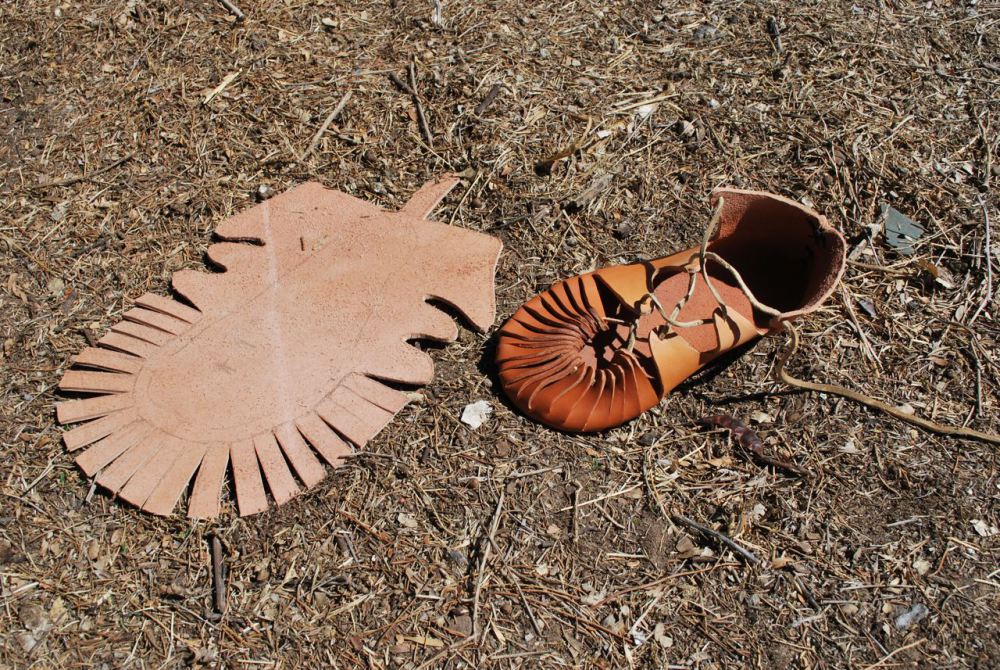 Historical examples vary widely but tend to have a lot of similarity in the complex toe-cap. Shoes are a difficult piece of clothing and protection because the fit is critical and even minor problems with the shoe will impact the feet in a negative way.
 The toe cap is formed by strips of leather overlapping which gives flexibility and room for expansion. The simplest forms are one piece but better versions are found with insoles and outer soles to extend the life and create a sturdier shoe.

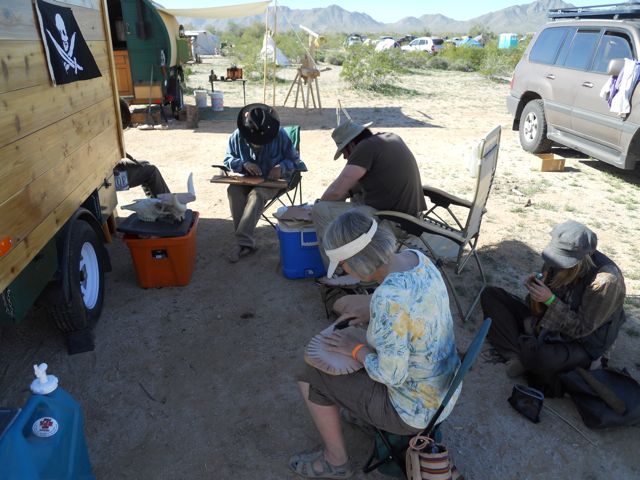

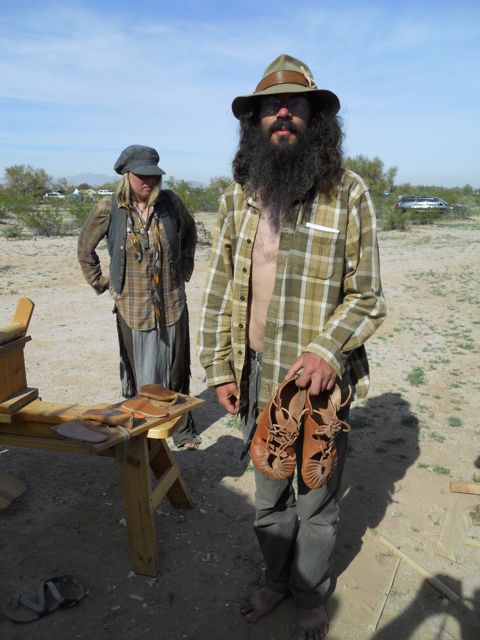
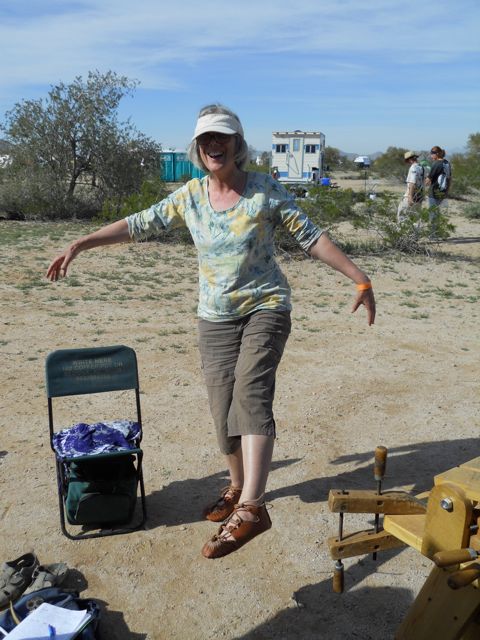 These were all made from premium oak tanned leather (ca. 8 oz. or 3.2 mm) which proves to be tough to cut but provides a long lasting shoe. It was a great set of students in the classes and I think we ended up with 17 pair of shoes in the end.
An earlier post describing my journey into Ghillies can be found HERE.
Thanks to those who participated in our bow making class this year. I failed to get many photos so if anyone would be willing to share theirs with me, I would be most grateful. Email me at zcoyotez (at) yahoo.com.

We made very traditional flat bows. This is a straight-forward, predictable design that is easy to tiller and makes a fine shooter.

I use a minimum of tools, relying primarily on the axe, drawknife, and spokeshave for the heavy work with rasps and cabinet scraper for finishing.

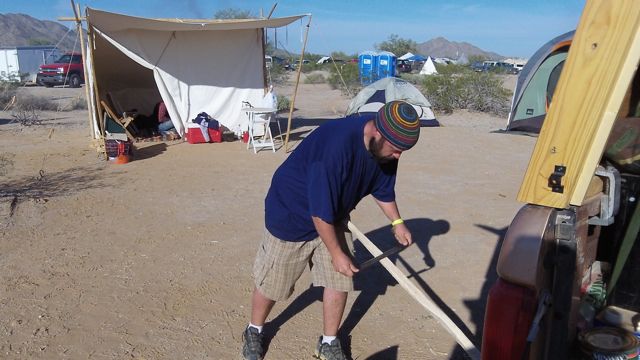
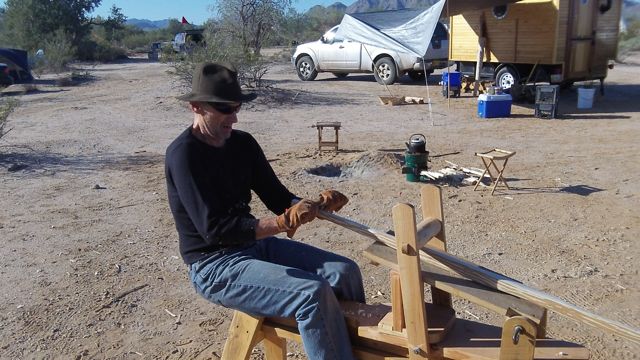
It is a little more difficult to teach such a hands-on skill to groups, as opposed to individuals, but the class seemed to go very well. The point was not to just make a bow but to learn enough of the concepts that everyone in the class should be able to go home and make more without much guidance. A key to the success is using good staves to begin with. There is enough to learn without added problems of twists and knots in the raw material.
All of the bows were successful and I hope will bring happiness for years to come.


 Preindustrial Craftsmanship