Caravan Design: The Open-Lot

An ongoing series of caravan designs to aide the modern builder.  A little history goes a long way to solve our design problems. 

The Open Lot is about the simplest of the true living wagons (properly “waggons”) of the 19th century.  Of course any covered wagon or cargo trailer can suffice when necessary but once these become real homes, some forethought in design goes a long way.  It is worth remembering that the caravans we know and love evolved in the cool, temperate region of northwest Europe and this influenced their design.  If these had originated, as we know them now, in hot, windy deserts or steamy jungles of southeast Asia, other considerations would have prevailed.  For instance, the near universal inclusion of a wood stove would not have occurred.  Better ventilation would have certainly been key.

OpenLotFloor
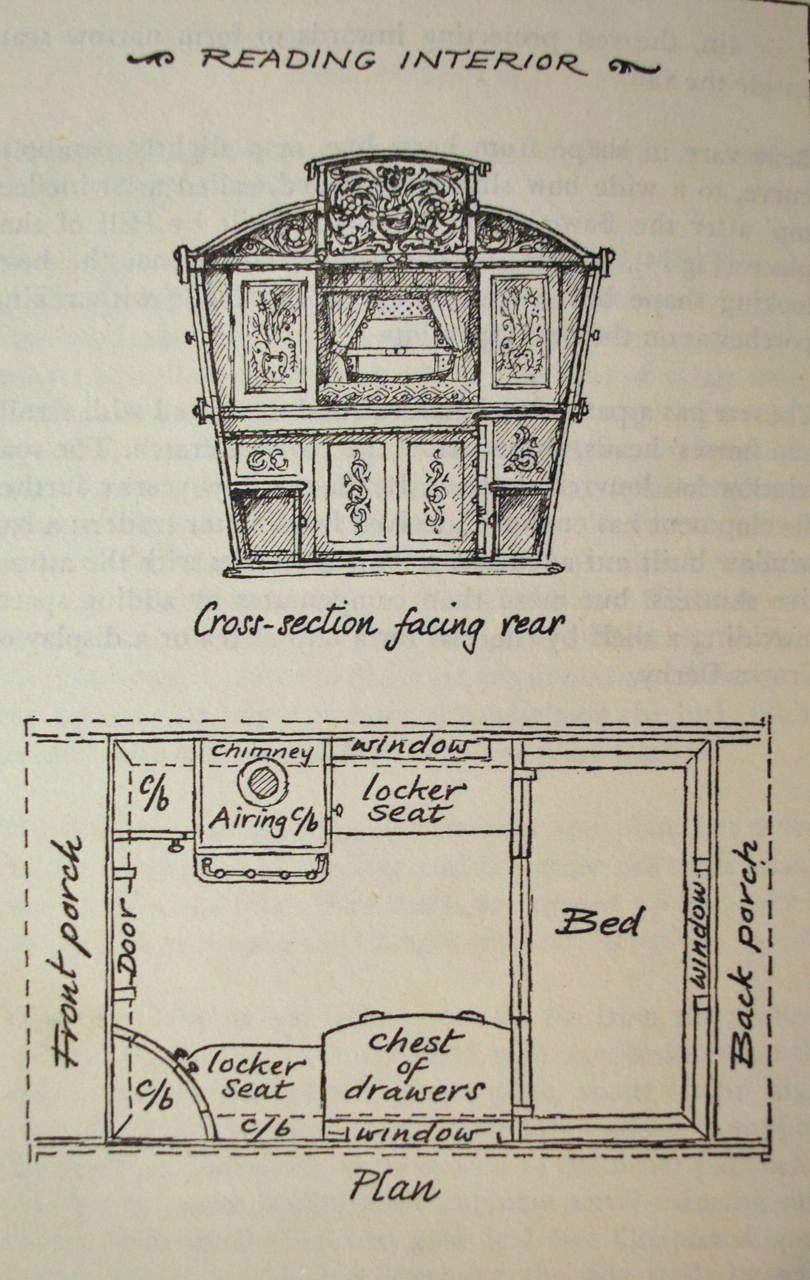
Illustration by Denis E. Harvey in The English Gypsy Caravan, by Cyril Henry Ward-Jackson.

Some of the earliest truly purpose-built living wagons in our lineage are the Open Lots.  Essentially and early covered wagon with closed ends and built-in furniture.  To maximize living space, the bed slides out for sleeping.  There is ample floor space, a built-in chest of drawers, cupboards and under-bed storage.  The massive cabinet under the base of the bed was used for storage or for children, as need arose.  The example above is essentially the pinnacle of this design whereas some were far simpler.
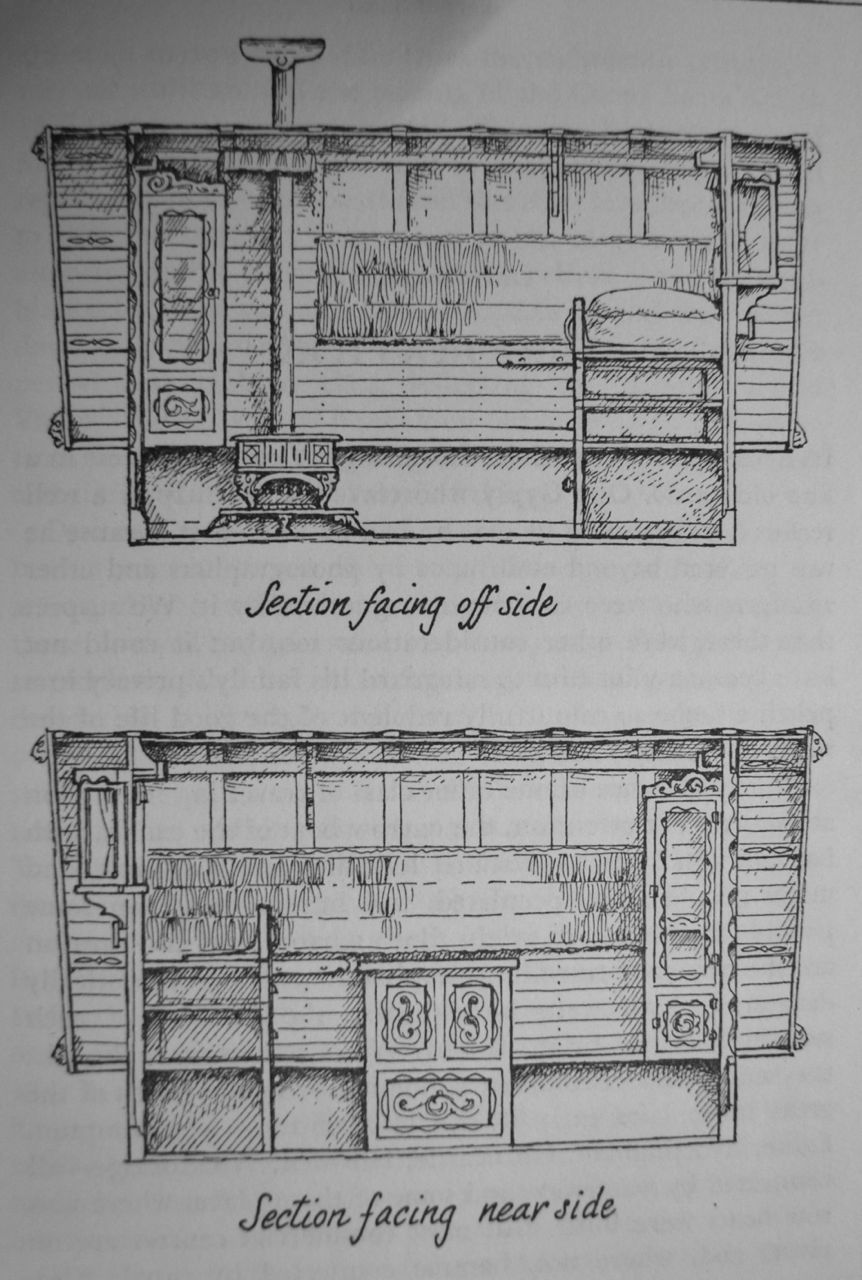
OpenLotCross
Illustration by Denis E. Harvey in The English Gypsy Caravan, by Cyril Henry Ward-Jackson.

The Open Lot is almost the blank canvas for later designers to expand upon and improve.  On possible drawback to this design was and is the curved walls, limiting the ability to build upon and essentially eliminating the possibility of side windows.  The positive feature of this design was it’s light weight.  Note that even in this era, side walls were built up, out of normal reach from outside for safety and security.

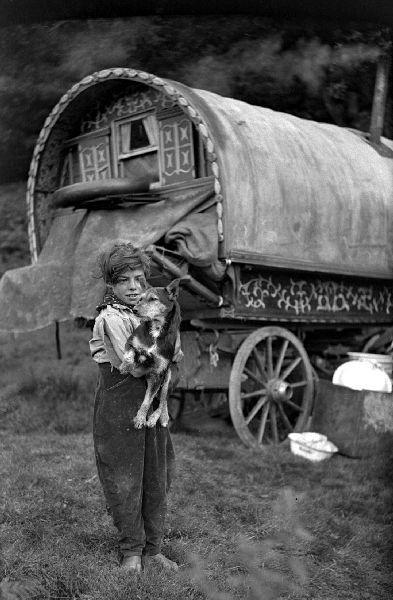
From Gypsies and Gentlemen by Nerissa Wilson.

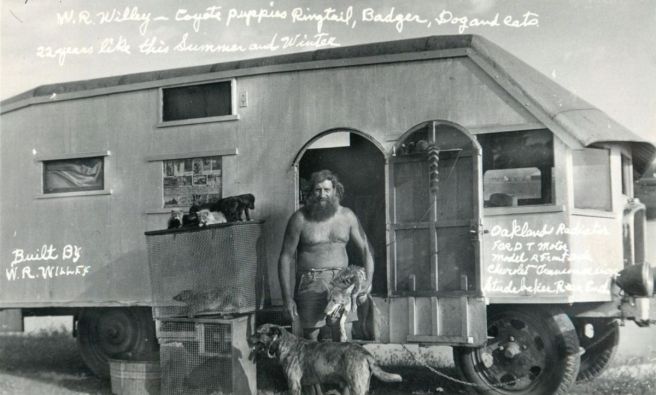
The Open Lot remained the base-level caravan and saw wide popularity until recent times amongst horse powered travellers in Britain and Ireland.

Marketing to the Caravan Craze: Caravan Case and Contour Books

 Presenting the traveling requisites; a caravan case and road-grade book.

CaravanCaseAdvertisement for a lightweight but implicitly tough (it is sole leather after all) suitcase or light trunk for the traveler.   Road grade books were very handy in the days of principally human and animal power.  If you are cycling cross-country or pulling and immense showman’s van you may choose to avoid some of the worst grades.  Britain was notorious for poor roads for centuries so you don’t want to be stuck in ruts on an eight percent grade at nightfall.  These books were lifesavers.

The Tiny House Movement

Here’s a recent conversation I had, as best I can recall, of creating disappointment and maybe using the wrong words when describing the Vardo.

A woman in a grocery store parking lot jogs up to the vardo while I’m making a sandwich shouting, “Oh my gosh!  That is so cool!  Wow! Is that a Tiny House like on TV? Can I have a look inside?”

“Yes, of course.  You can look inside.”  So far, it’s progressing just like a hundred other conversations I’ve had over the years.

“Is it like the little TV houses? You know, like on that show?”

“I don’t know the show but it’s actually a little camping caravan.”

“It’s not a Tiny House?  Oh, never mind then,” turning on her heel she walked away without a backward glance.  Then to another gentleman walking towards us she shouts, “It’s nothing.  It’s not like the Tiny House Show” shaking her head in disappointment.  The gentleman and I proceeded to to tour the little wagon and had a merry talk about the Vardo and having it as a traveling companion.

The Vancott.  From J. Harris Stone, 1914.
The Vancott, moveable cottage designed to solve housing problems for working families in England. From J. Harris Stone, 1914.

A Clarification – Something I find myself explaining on the road when pulling the little caravan is the difference between a Tiny House and a true caravan or vardo.   A Tiny House is just that; a very small house.  Because of codes and strong laws about housing in the Industrial Nations, Tiny Homes are usually placed on a trailer for legal and logistic reasons.  This doesn’t mean that most Tiny Houses should or could be dragged all over the country.  That’s not really the point.  They are generally too heavily built (rightly so) and use materials like factory-built house widows and normal pitched roofs.  While these make for a nicer living structure they are not designed for the sustained tornado-like conditions and severe jarring that come from over-the-road travel.

Showman's2
Late 19th Century-style Showman’s Van, Arguably the first true stand-alone caravan for full-time living. From J. Harris Stone, 1914.

When the world moved a little slower, some of these issues were not as important, such as real glass windows and hurricane-proof roofs, but now, we certainly don’t want parts to fly off at 70 miles per hours on the highway, or to show up in camp with shattered glass on the bed.

Definitions:

Tiny House – Very small home often mounted on a trailer frame.  Designed to be towed  to a final location or towed for occasional moving.

Vardo or Caravan – Small dwelling designed to be regularly towed to new location.

Early Worker Vans; Predecessor to the Caravan

WorkVanEarly work vans were designed to house manual laborers when on the job.  Great for highway and railroad crews.  These caravans were noted for poor ventilation and their spartan interior.  Three to six workmen were often housed in these wagons.

FowlerAll the necessities for living with none of the comforts of home.  Cheaper than regular housing and mobile too.  One can see how this evolved into the later caravan.  These were expensive and not as well thought-out as later ‘vans.

Vardo Plans: Reading Caravan

Many considerations concerning floor plans and general layout have come my way over the years.  I am compiling as many as possible to post here.  To start things off, here is the iconic Reading Waggon by Dunton’s (note: two “g’s” in the older British spelling).

ReadingExtThis design is truly the classic.  When one sees this, it cries of the open road and Gypsy Wagons.  It is Henry David Thoreau’s Walden cabin on wheels.  The wide rear axle and narrow front carriage was the best of compromise for agility, weight, and worthiness on and off road.  This design is worth a potential builder scrutinizing in detail for it’s perfection of design.  A mollycroft roof, high clearance, well-proportioned windows, and solid design make this ideal for the rolling home.

DSC_0197On the downside, kite walls (out-sloping) add some difficulty when working on interior shelves and cabinets.  Also, as noted for over a hundred years, the mollycroft can weaken the roof and ultimately increase the chance of leaks.  A small price to pay maybe but something to keep in consideration.

ReadingFloorThe classic caravan at this period included a full chest of drawers and a fairly large stove, limiting seating to a largish space on the stove side and a small dressing seat next to the dresser.  Although we read of dozens of children being born and raise in this design, the real layout seems to be based on the couple.  Kids will make due.

All images above are taken from The English Gypsy Caravan, currently out of print.

Mrs. Coucer Green and Other Great Old Photos

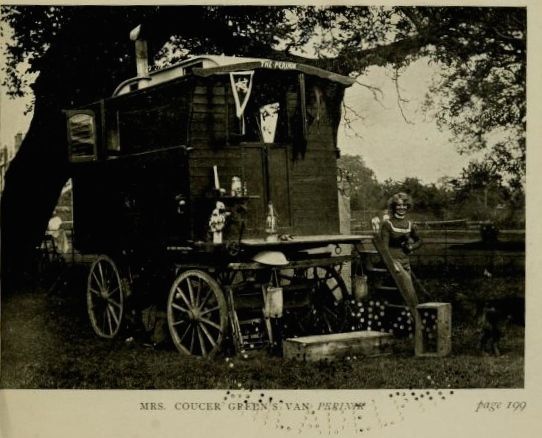
MrsCoucer
The PERINIK. A beautiful living van.

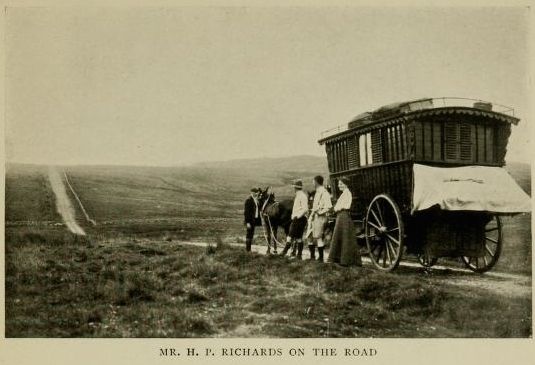
Three great and rare books have come to me in the very recent past.  Each has it’s own merits and is full of great stuff.  I am scanning, reading, and summing up some excellent stuff and will get it out as soon as I can.  In the mean time, enjoy these great photos ca. 1911-1914 the Golden Age of Caravanning.

LadyMore and better details on the way, including plans and historic photos that have lots to show us about design.