Basketmaker Style Spearthrower 13 Years On

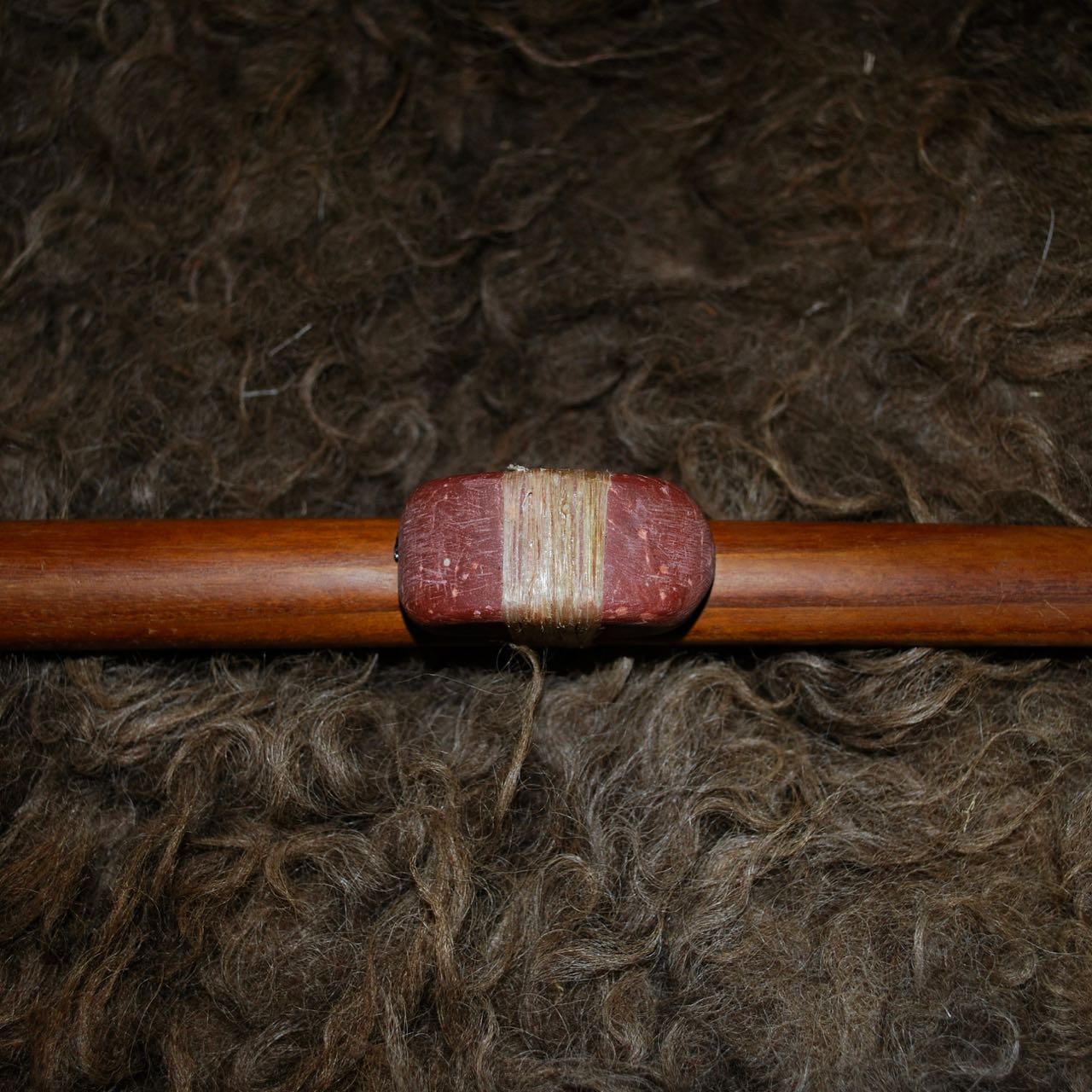
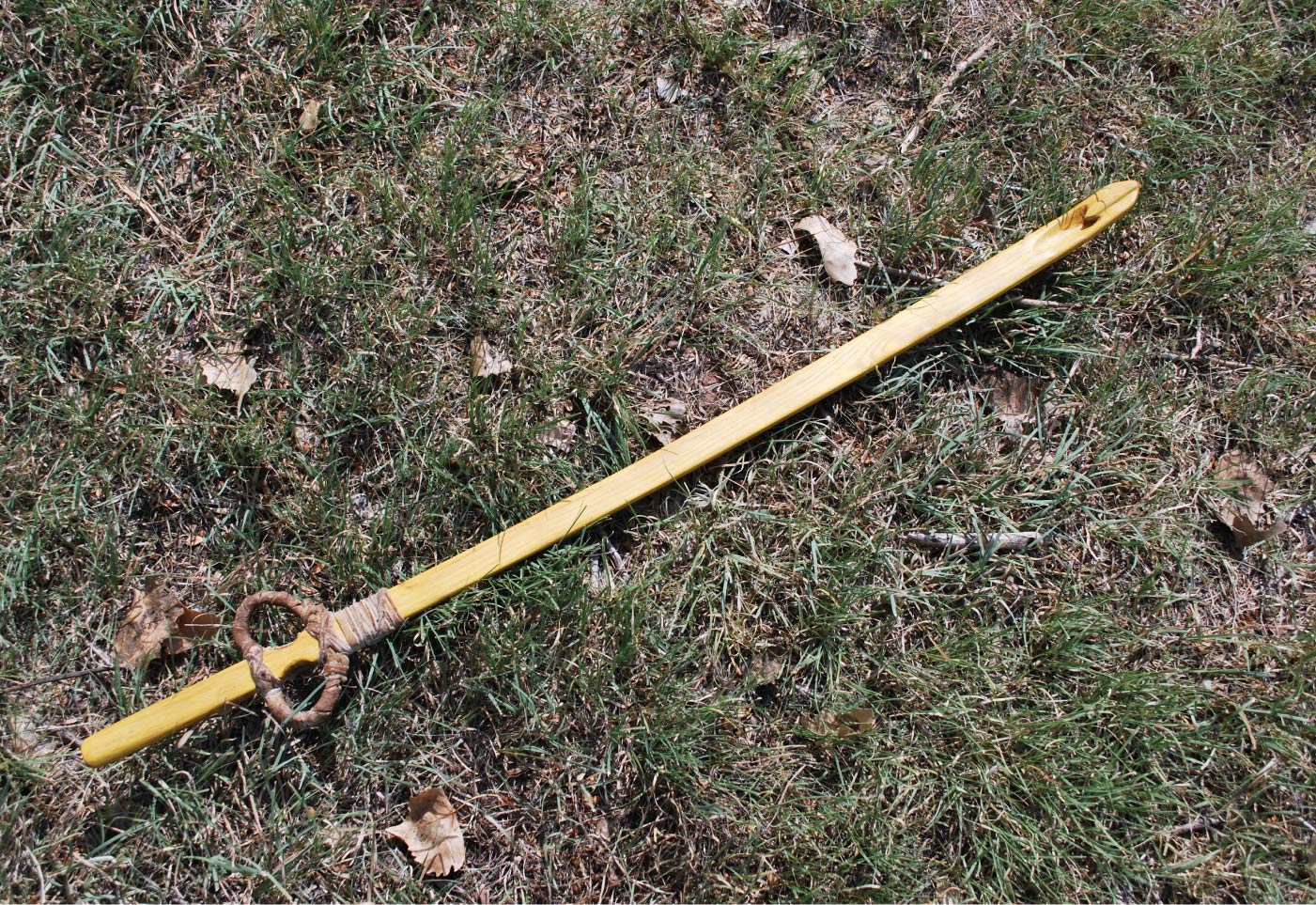
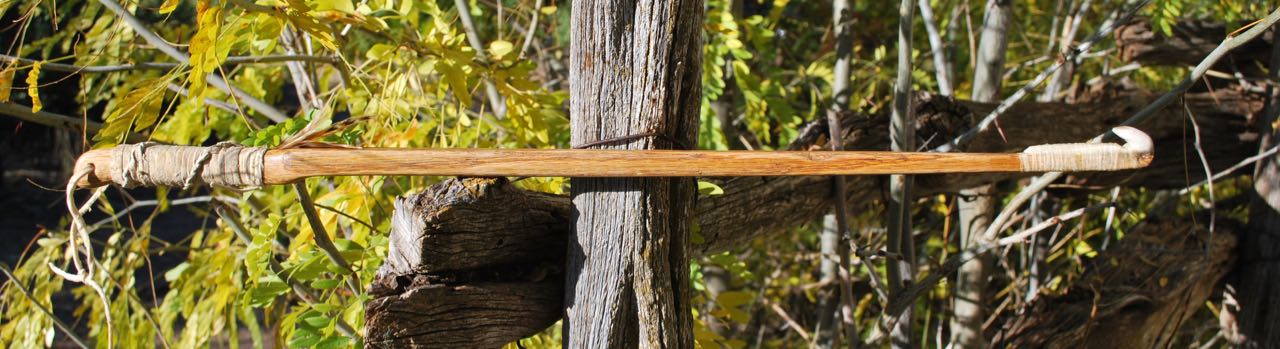
Here is an update on one of my favorite throwers. It was created one morning from a scrap of Osage Orange wood from the bow-making pile. The finger loops are rawhide. The style is a generalized Basketmaker/Great Basin but is probably a bit heavier than some of the originals as I throw darts that are probably heavier too.  It works for me. It has no weight attached yet in the above photo but had one added later just for the “tradition”. It throws well; even with my heavy Paleo darts.

This small but efficient hook style has never let me down.
I really enjoy seeing how much the Osage orange wood has darkened over time to a beautiful depp color.
The weight is attached with pitch glue (that has somehow never failed yet) and lashed tight with sinew and hide glue.
The natural curve of this piece is perfect for me.
I wasn’t really sure if I was going to succeed with these loops but they have held up remarkably well.
The weight is a chunk of argillite from central Arizona.

This piece has made me think of longevity of simple tools. Since I made my first thrower in 1987 I have learned much from examination and experimentation. If I used it everyday, I’m certain it would be battered and possibly broken by now. When a spear thrower isn’t being used for its intended purpose, I suspect it would be a club, digging stick, reach pole, or any other purpose that a stick is used for.
Spear Throwing Time

I recently got around to repairing my partner’s atlatl for an upcoming throw at the Landmark.  It’s been in use for seven years now and suffered some dings as well as losing it’s wooden hook.  The handle is oak and the original cocobolo hook has been replaced with antler which will hopefully last a lifetime.

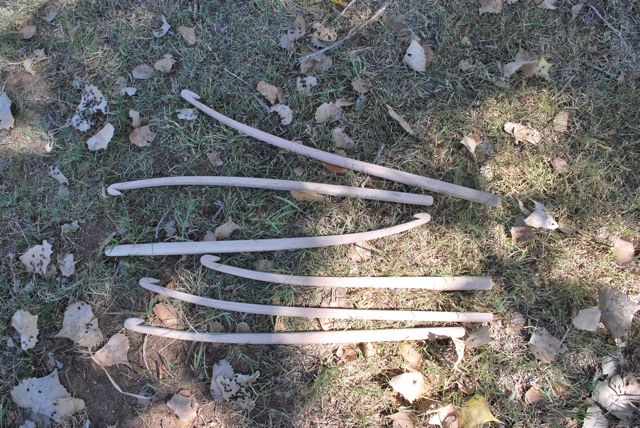
DSC_0002 (9)The hook itself can come under a lot of stress, especially if it lodges in a too-deep socket on the spear or dart.  I started keeping them fatter and flatter, more like Upper Paleolithic specimens from Europe, making them stronger with a smoother release.  This design works well for me.

DSC_0003 (8)
Side profile of the nearly finished antler hook.

The hook above is held by elk sinew and hide glue. It may need another round to smooth it out.

DSC_0002 (10)
Sinew coated in hide glue drying on the spear thrower hook.

Sinew is an amazing material to work with.  I learned about it when I was a teenager by reading Larry Dean Olsen’s classic book Outdoor Survival Skills and have been a proponent ever since.  Real sinew has many advantages over modern materials including the so-called “artificial sinew” in that it adheres to many surfaces, bonds perfectly with hide glue (sharing much of the same chemistry), and shrinks as it dries making for a tighter bond.  Another advantage to sinew as a survival tool is that every animal has it, so watch out.

DSC_0001 (8)
Grip wrapped (half-hitched) with buckskin lace and ornamented with some hackle feathers.

Finally, a lot of folks prefer a leather gripped handle for a better hold when wet or sweaty.  This thrower has won quite a few competitions in the past and I hope that tradition continues in it’s newest reincarnation.

Reoww!
Reoww!

They work!

Save

Spear Thrower

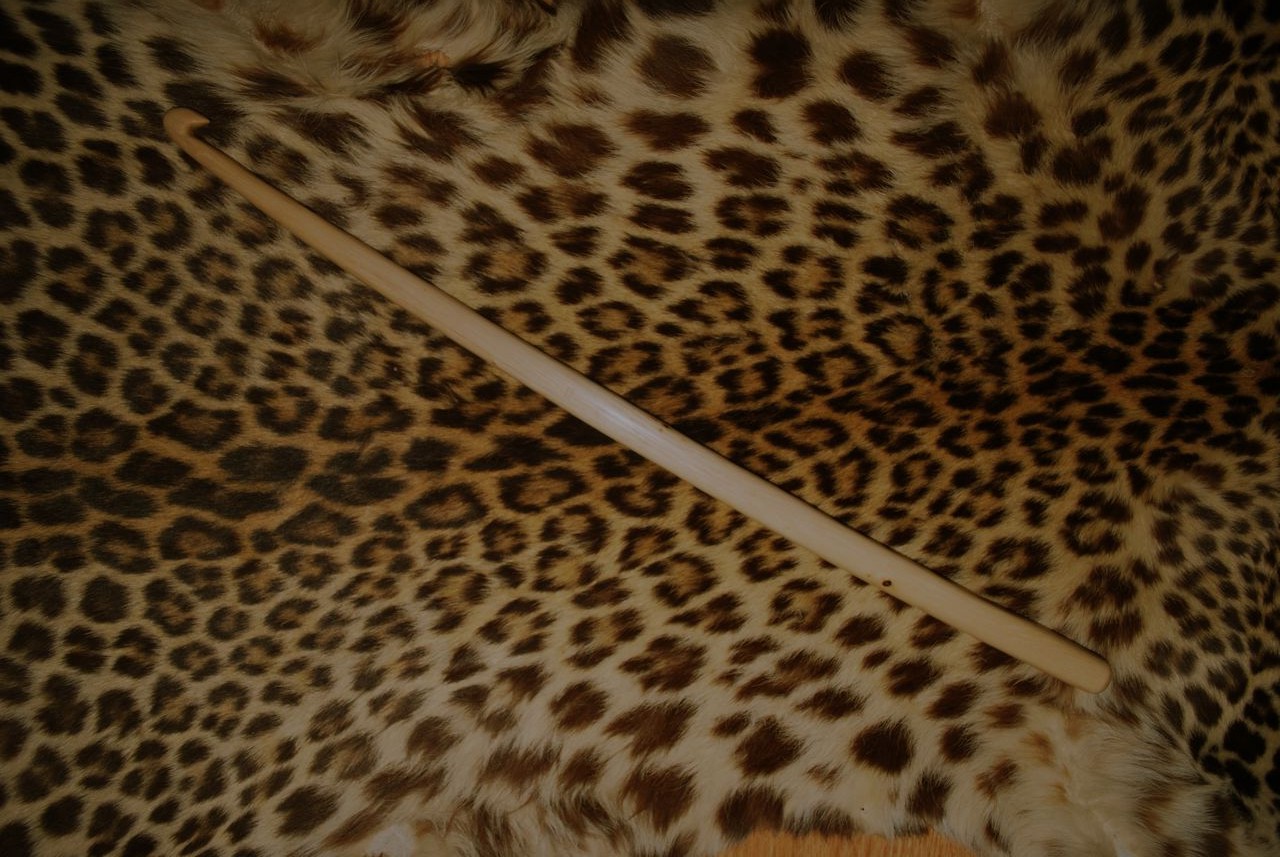
And in some spare time, I carved a spear thrower inspired by the an Old World Upper Paleolithic design.  This one is made from seasoned shagbark hickory (carya ovata) from my old farm.  It would certainly be handy as a multi-purpose tool to a hunter-gatherer and could easily serve as a club or throwing stick for small game.  At least some of the early ones were from more durable materials such as antler or ivory.

A close-up of the hook.  The thrower was burnished with bone to create a nice finish, then coated with walnut oil for protection.