Folding Camp Funiture

I’ve been making folding camp furniture.  The stools are sometime called “pea-pickers”.  They were somewhat difficult to figure out without a plan but some photos of others and experience making other furniture helped.

finished

They’re not as easy to make as I thought they would be.  The holes must be very precise and dowels tight-fitting.  If everything isn’t square and precisely cut, the stool just doesn’t work.

folded

This is their beauty.  They fold flat and have an integrated handle.  They can be made just about any size and out of any straight lumber.  My first one is made from scraps from around the workshop.  These later ones are from premium pine.
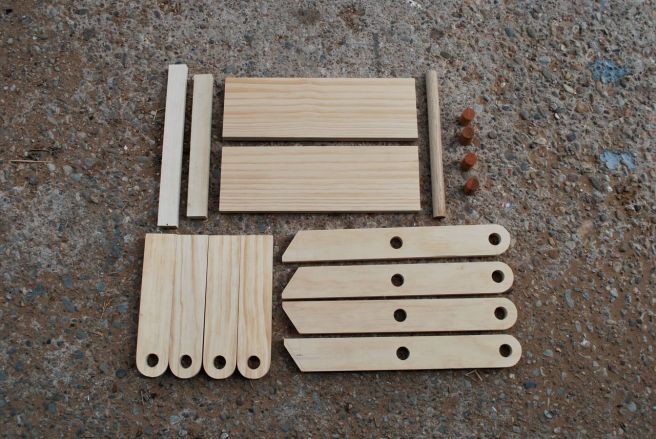
17pieces12holes

Seventeen pieces, twelve holes.  Stick ’em together.  Sit.  Mine are sturdy enough to use as a step stool, with some caution due to the narrow width.

strong-enough

A table of similar construction.  The top is about 22 x 46″.  I made it 2 inches lower than a standard table to fit the stool height.  A combination of pine, poplar, and oak.  Definitely strong enough if it is well-fitting.

Basketmaker-Anasazi sandals

These are sandals constructed from the narrow-leaf yucca.  These designs are based on specimens preserved in caves.  These might not be much to look at but they are remarkably impervious to the many sines, spikes, and other poky things found in the deserts of the west.  These are two and four warp designs and the yucca is only slightly processed.  The leaves should be dried prior to use and then re-wetted just before weaving.  This prevents the normal loosening associated with shrinkage during drying.

dsc_0060

These are being diplayed at the Blackwater Draw atlatl and Primitive Technology day 2008.

dsc_0061

I intend to continue to research these and will try to compare types through use.

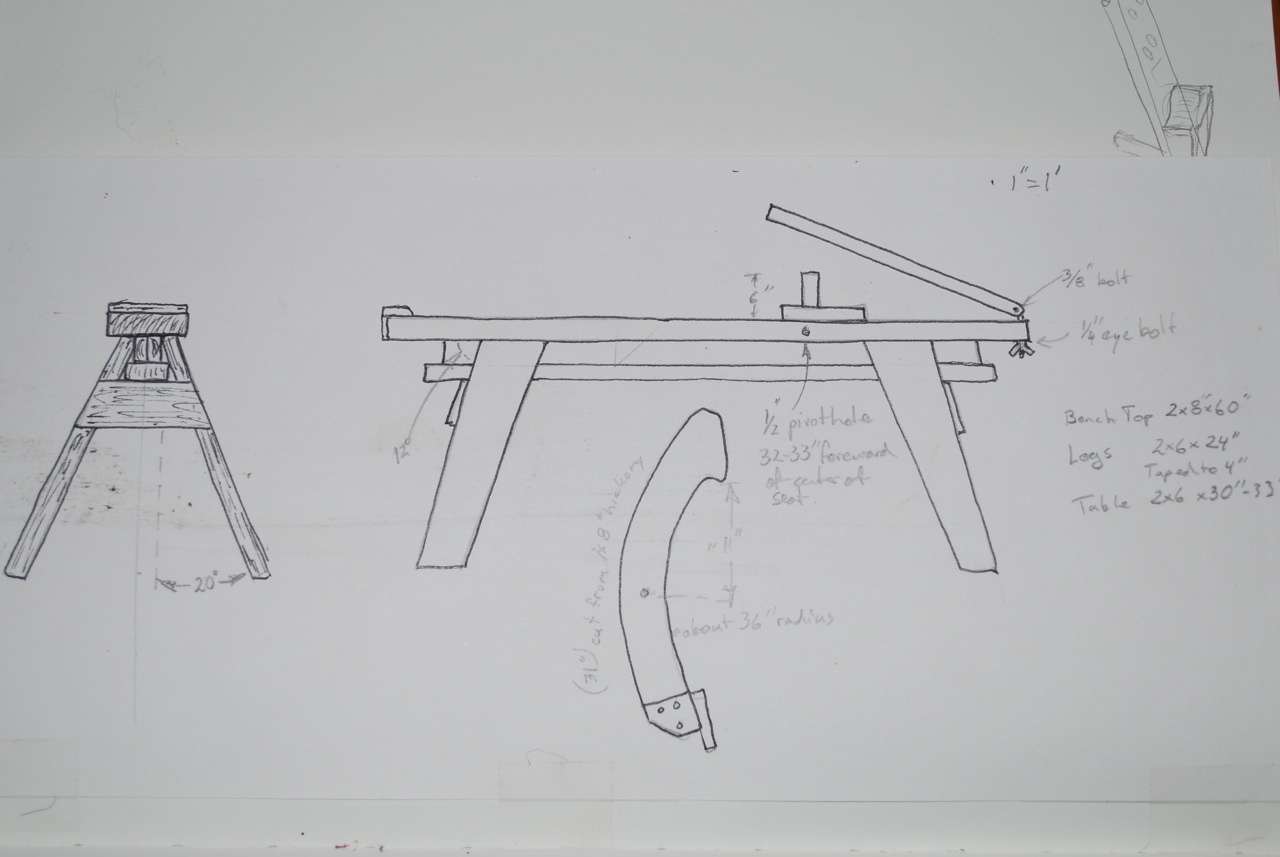
Shaving Horse Plan

Here is an old set of plans I made for myself a long time ago. These are meant for dimensional lumber. This plan is for a short horse. If you are tall or don’t mind the extra length to transport, an extra 6 inches is a good idea. You can see from the other horses that this more of a guideline than an actual recipe.
The hard to figure part is the length of the arm, the head, leg height, and other parts specific to your body and what you generally make. I’ll measure more and put up something better when I can.

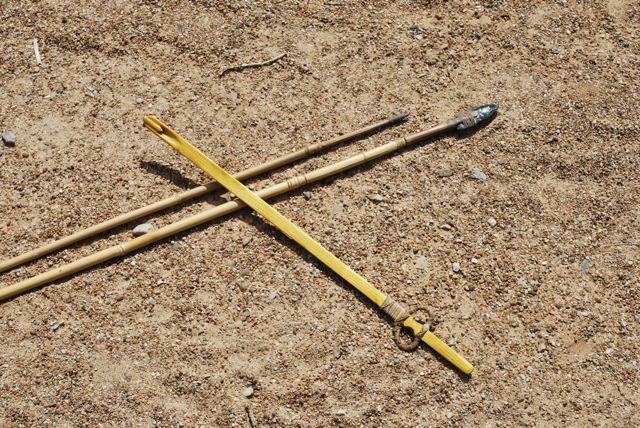
Dart and atlatl flex

These pictures capture the enormous flex that a dart undergoes during the throw. Not quite as evident is the flex in the atlatl itself. This one takes on a shallow “S” curve. This was an unfinished river cane shaft. It had been somewhat straightened but no forshaft or point were attached. If they were, there would probably be even greater flex due to the higher mass slowing the acceleration of the front end of the dart. I would call this shaft moderately stiff-spined and it flexed far more than could be seen with the naked eye.

This student was kind enough to allow me to photograph several throws to capture the right moment. This is about maximum flex.

This flex is vital to a powerful and accurate throw.

Below are a couple of darts with the new thrower.