House Trucks Again

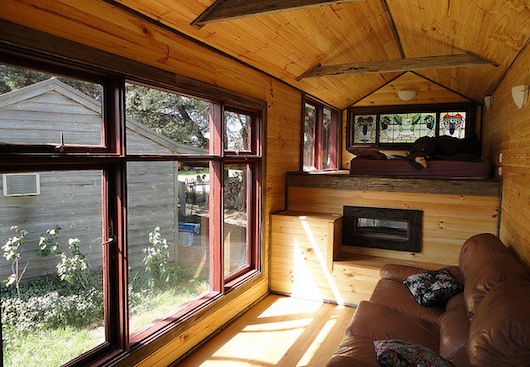
My appreciation for house trucks has grown immensely over the years.  It’s not easy building a structure that is both light, strong, and wind-resistant.  Caravans, house trucks, and RVs have to undergo the rigors of hurricane weather every time they hit the road and still be light enough to be pulled.  If you are willing to get RV-type mileage from your vehicle  you can convert an older RV, large truck, fire engine, or bus into a fine living platform.  Starting from a link on Lloyd’ Blog I began looking at some very cool house truck conversions.  These have been around all my life and I’m surprised I haven’t started one yet.

These Bedford Fire Engines make beautiful platforms.

The trucks below were featured on the Tiny House Talk web page.

I wouldn’t want to drive these in high winds but the interior spaces are great.  Visit his Flikr page to see more interesting work.  They look very practical and I appreciate the low-maintenance exteriors.

And finally, one of the most beautiful art car builds I have ever seen… The Decoliner.  While on his website, its worth looking at his other projects as well, especiall the 1800 cubic inch, 1000 h.p. tank motor turned art/race car.
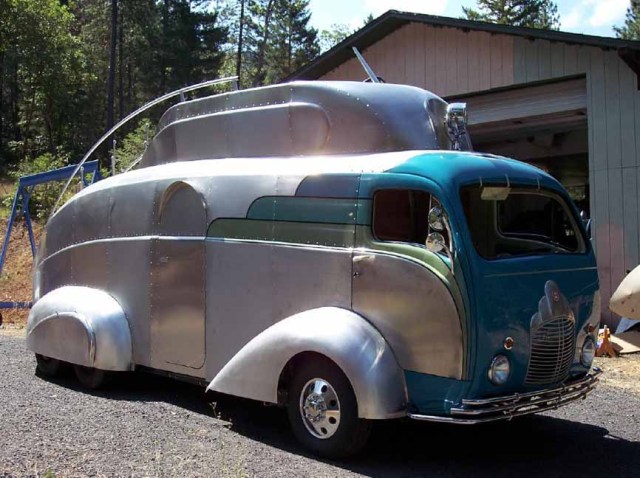
Take the chassis from an old RV, add a classic truck cab and a lot of beautiful design work and this is what can happen.  This is my new dream car.  Time to peruse Craig’s List to start looking for a chassis.

Yucca Fiber Skirt

Summer before last, the girl decided to branch out from just turning our yuccas into cordage.  After being inspired to make natural clothes by constructing a cattail hat, she decided to make a yucca skirt roughly modeled on the elderberry skirt example in Paul Campbell’s  book Survival Skills of Native California.

The completed skirt.  The buckskin shirt isn’t usually tucked in but is here show the top of the skirt.

In the past we have cleaned the fibers both by retting and by cooking.  The cooking is far faster so she spent a couple days stewing and cleaning the leaves for the project.  The resulting skirt was from a single large narrow-leaf yucca.  To make it fuller, it would take about twice this much fiber.  This is an excellent project that I think would translate well into other materials and could result in a cape, blanket, or even shelter.

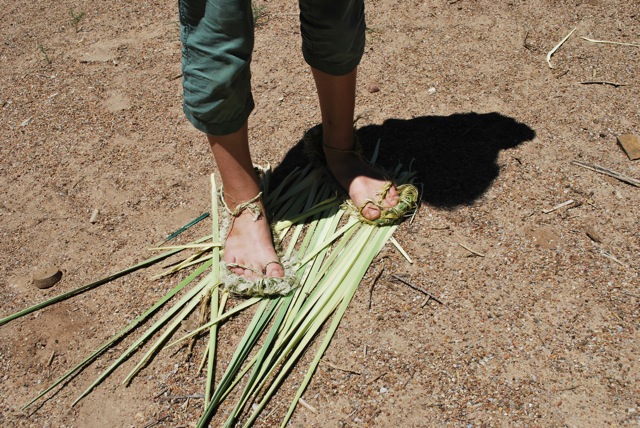
To top it off, here are a pair of yucca fiber sandals to complete the outfit.

These aren’t the fanciest pair but were quick and easy.  One pair can take almost as much fiber as a skirt.  Next time, I’ll try to document the process in a “how to” format.

Folding Stools and Table

I have had many requests for dimensions of the stools and table so I finally sucked it up and measured some things to include here.  The only ones apparently on the web cost money so here are my dimensions.  Please modify them to fit your style, needs, or lumber.  A little time with some graph paper will go a long way.

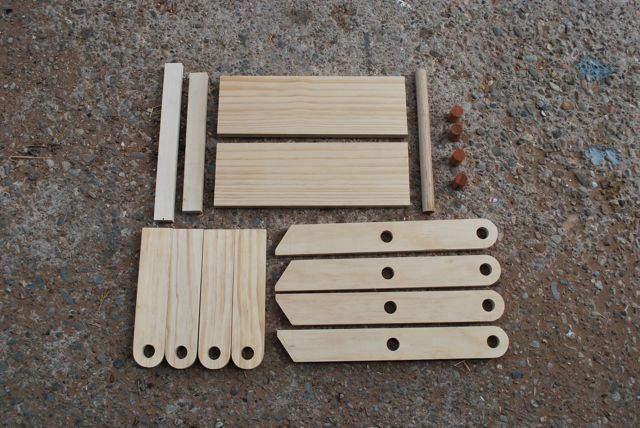
Folding stools.  Here is my cutting list from most recent batch.  The angles of the feet  will have to be worked out for yourself.  Also, not listed are the stretchers (the cross boards between legs).  These are not absolutely necessary but make the whole shebang a lot stronger.  Use whatever you have.

Legs 1×3″: 4 @ 18″
Skirts 1×3″: 4 @ 11″
Seat 1×6″: 2 @ 16″ (can vary substantially.  adjust dowels accordingly)
Dowels 1″ oak: 1 @ 12 3/4″
Dowels 1″ oak: 4 @ 1 1/2″

First, make these parts.
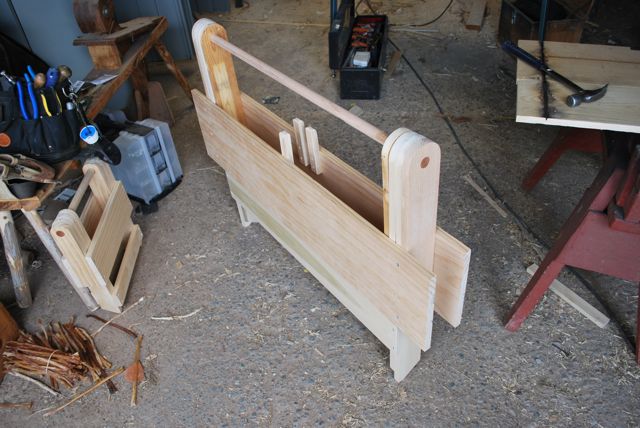
Assemble like so...

Then finish with the rest of the parts (See top photo).

Table test. Suitable for light dancing.

Note in above photos the far side stretcher isn’t in place.  I ran out of wood this day.

Table
For a 28″ tall table:
Legs 1×4″ hardwood: 4 @ 34″
Skirts 1×4″: 4 @ 20″
Top 1×12″: 2 @ 36-48″

Assemble just like the stool.

A little nomad furniture project.  Great for when guests arrive too.  If you are creative, the tops can be cut into ovals, rounded rectangles, or made circular.

Tool Tote

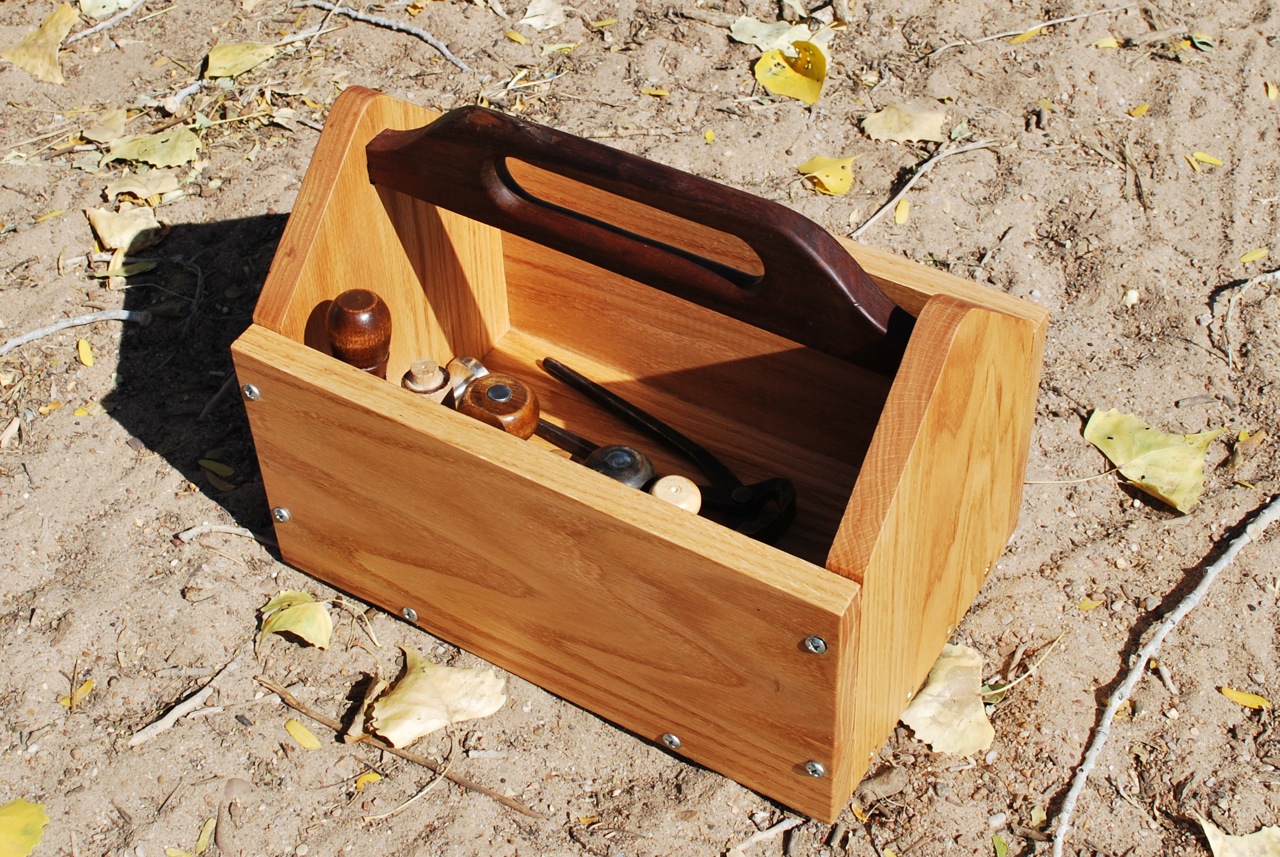
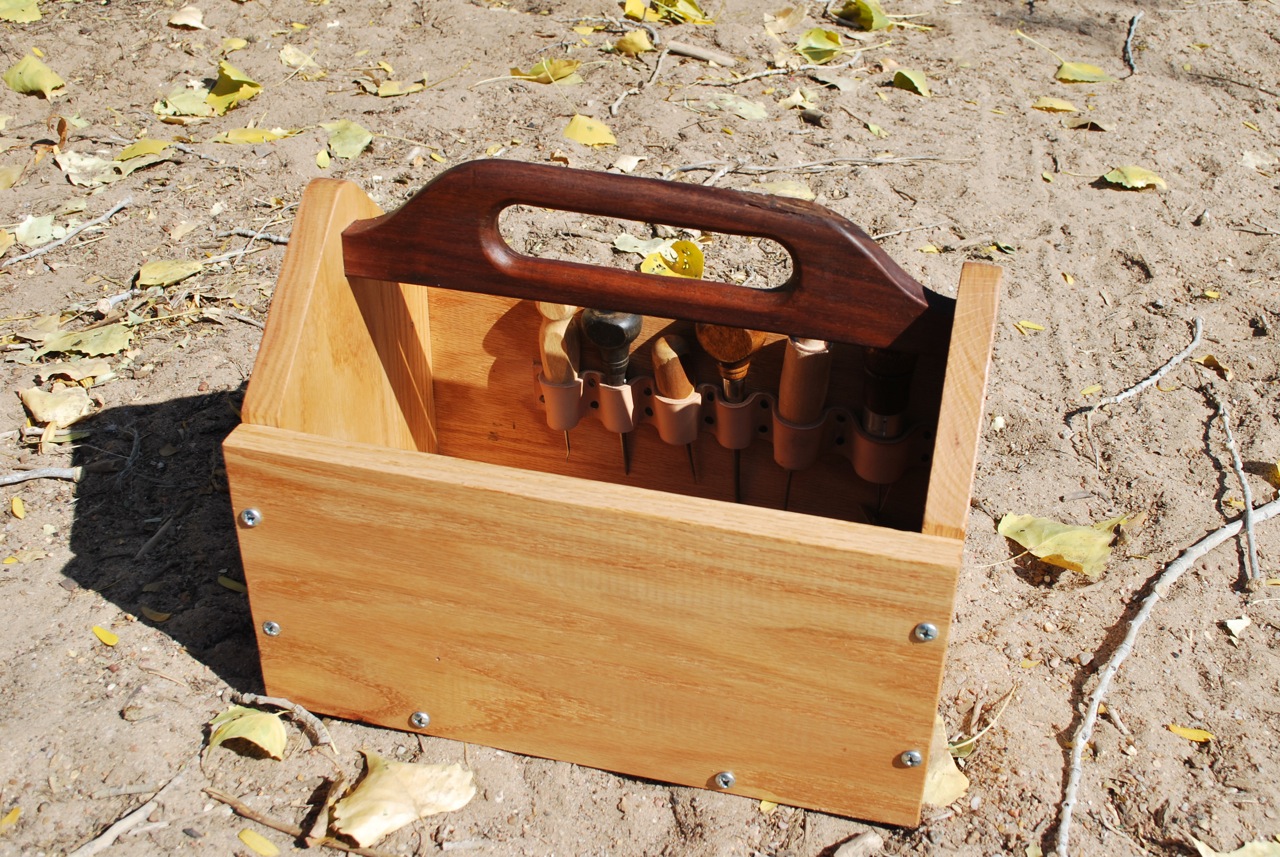
The shoemaker’s tote is essentially done and I had the chance to get a couple photos over lunch.  I will be adding more leather pocketing to hold tools but wanted to wait until I knew where things should be.

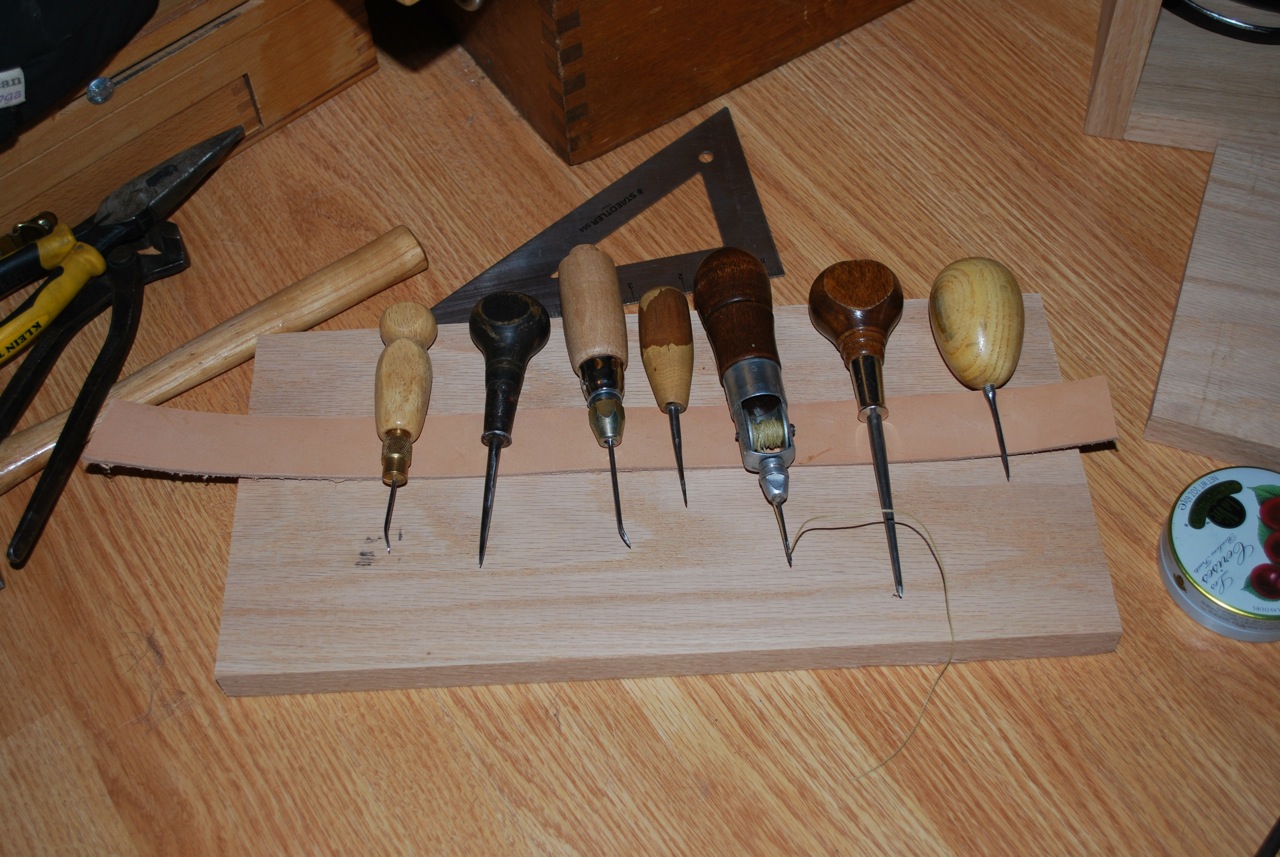
Laying out the tools

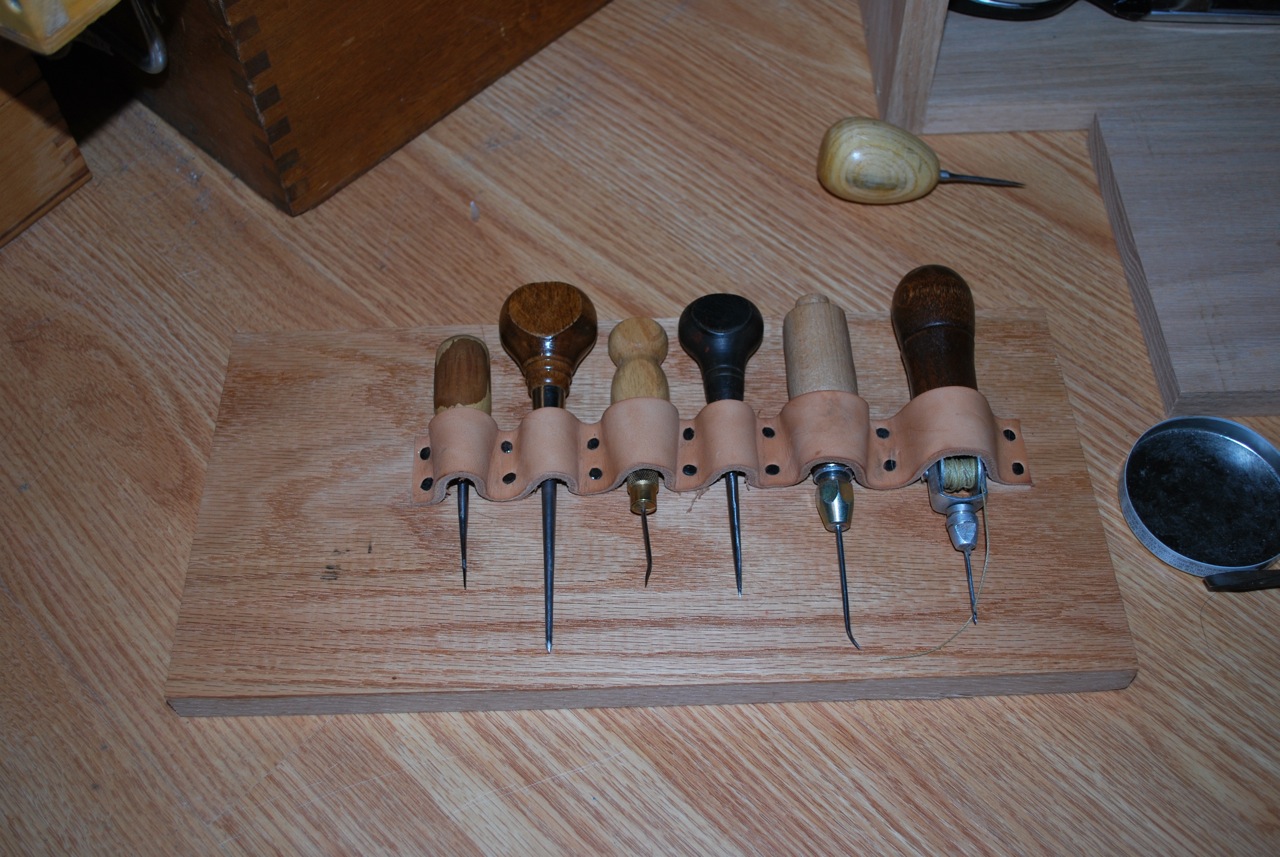
This is the inside of the side panel.  The tools that I know for certain need to be handy, not rolling around on the bottom of the box.

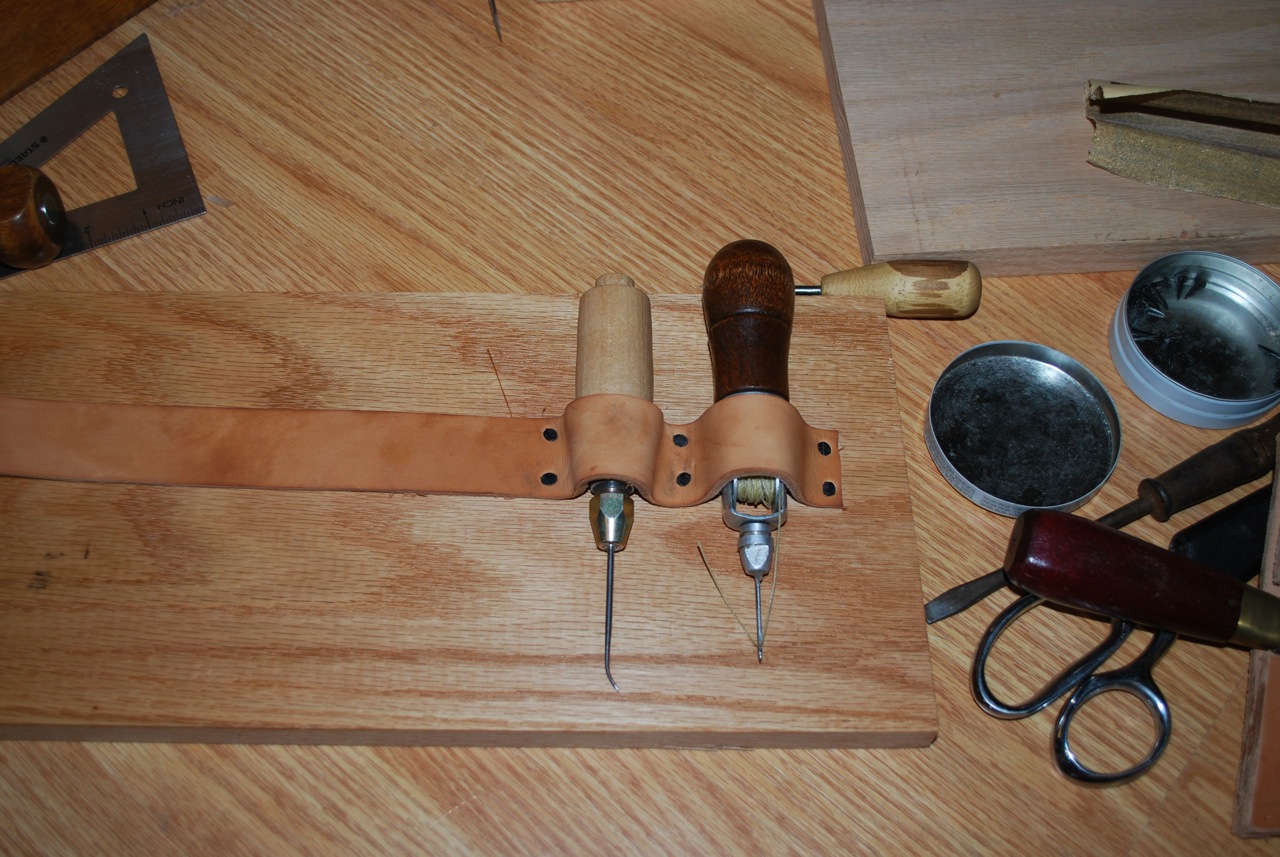
Test fitting a couple tools.  The strap was cut 1 1/4″ wide and is not as long as it should be.  I am using carpet tacks as I had some laying around.  Note that the inside has been given a coat of boiled linseed oil prior to placing the leather.

The essentials in place.  The bent awl is a little too deep and barely touches the floor of the box.

I used a few pan head screws I had handy.  They work as bumpers.  The box has been oiled at this point with boiled linseed.

And the other side.

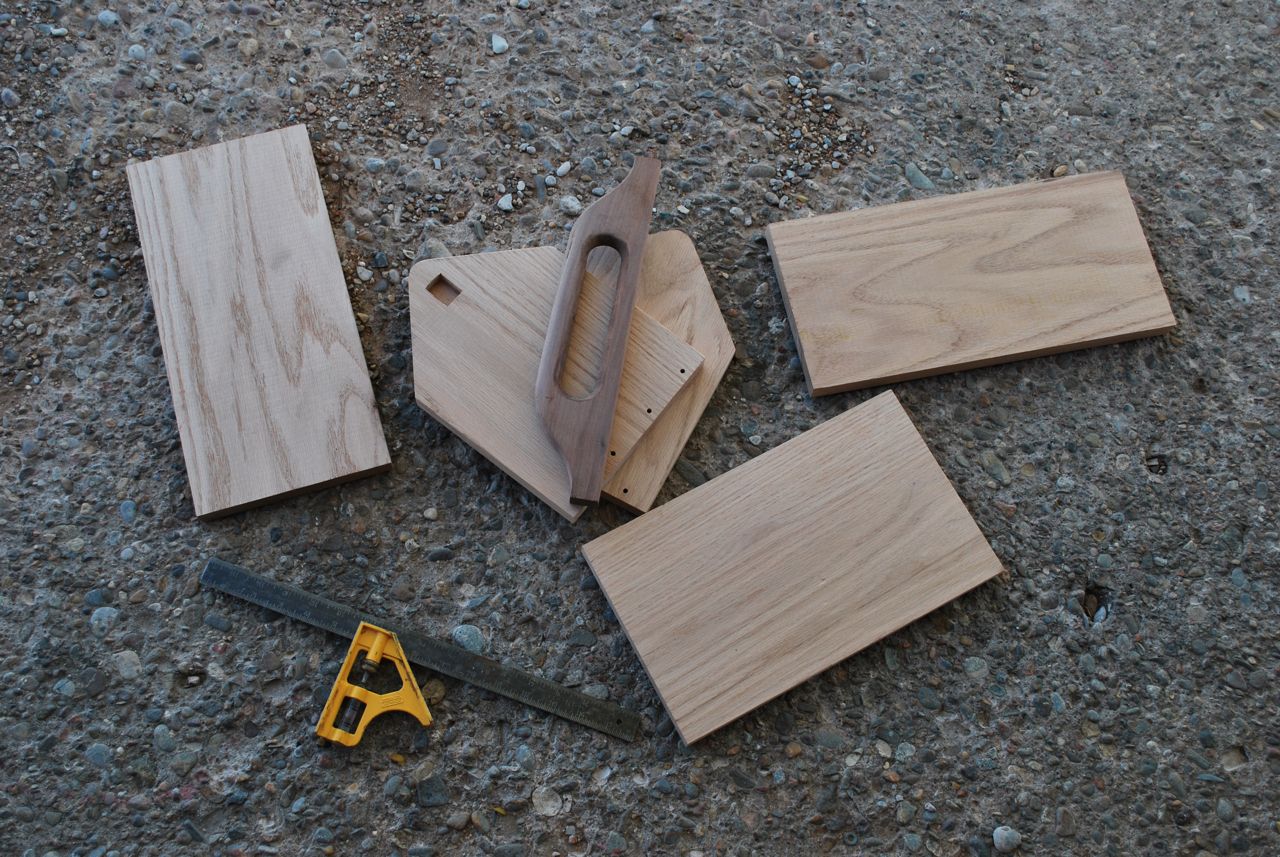
If you didn’t see the previous post, this is the plan photo.

Three rectangles, two pentagons, and a handle of choice.

Final dimensions are 14 5/8″ long, 9 1/2″ wide, 10 3/4″ tall.  I wanted to be able to comfortably fit a twelve inch ruler in the bottom.

Shoemaker’s Toolbox W.I.P.

Lunch-time post:

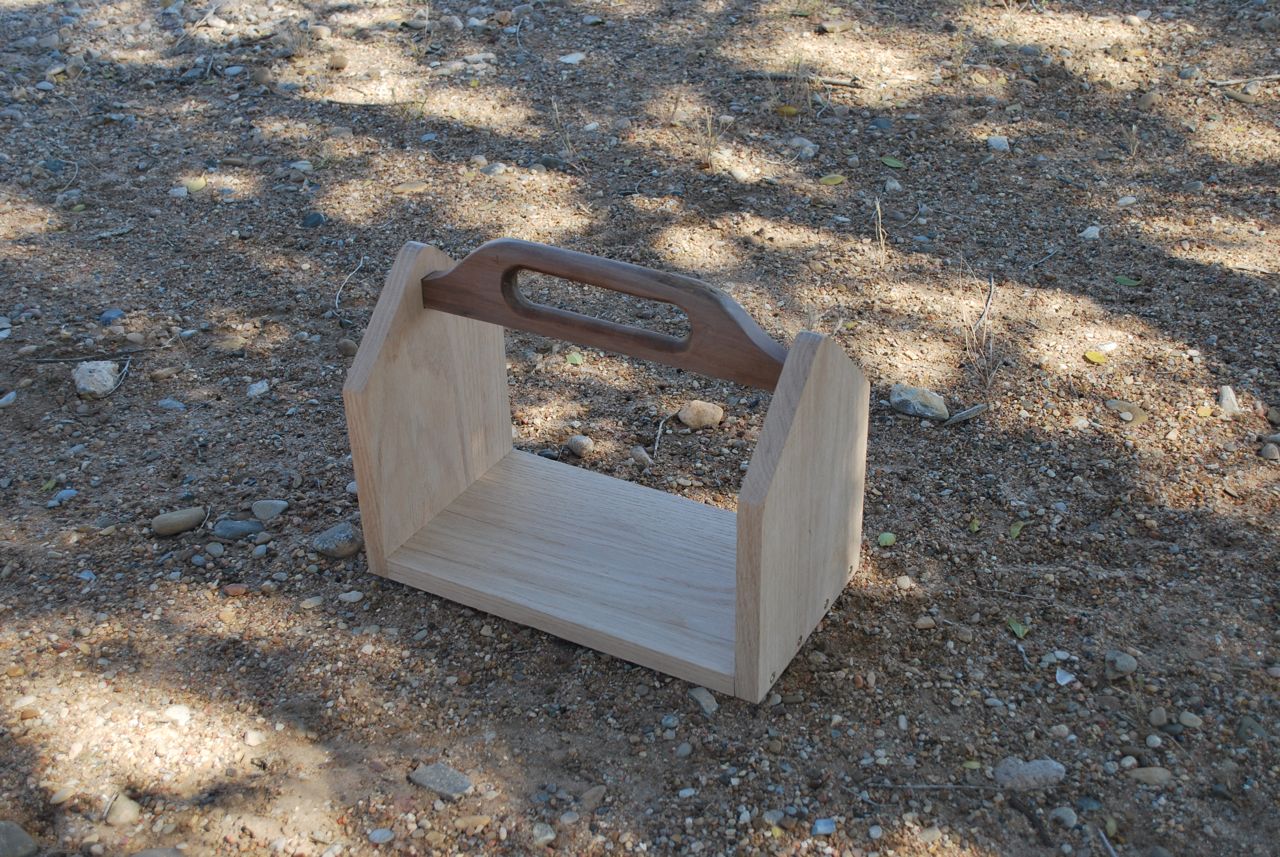
I began working on a shoemaker’s toolbox this weekend.  It’s based on an eighteenth century design but probably goes back further.  It will have leather “pockets” for the awls and some long tools.  The difference between this and a carpenter’s box is in the upright storage to keep the tools very handy.  The box I based it on can be found here: http://aands.org/raisedheels/Other/Toolbox/toolbox.php.

No complicated joinery other than the half mortises for the handle.  The sides are off still to tack in the leather pockets.  The original was nailed together but mine uses wood screws (brass).  Material is red oak with a walnut handle.  More to follow.

Tool Museum

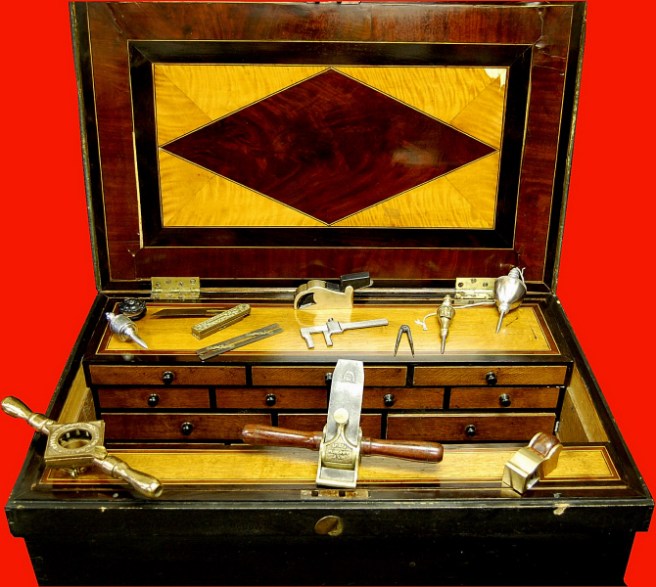
If you love beautiful tools (if you don’t, you should) there is a remarkable web page devoted to some remarkable historic tools.  I hope to see these in person someday.  I hope  I get to Michigan or find him on the road sometime.  He’s got a pretty amazing paint job on the trailer too.

Click the ship plane to open the museum in a new window.

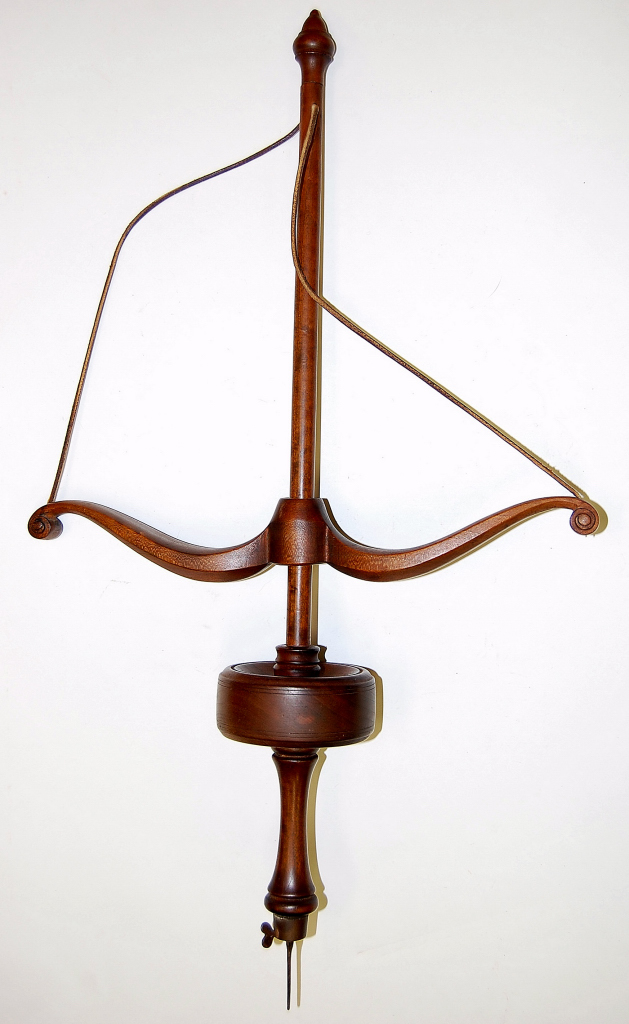
I really like this drill.  I think I need to make one.

Thank to the Village Carpenter (http://villagecarpenter.blogspot.com/) for having a link to the museum.

New High Tops

Determined to get the pattern right once-and-for-all I have been slaving away on a new pair of shoes.  As a matter of fact, I think these shoes are completely slave-labor-free.  The leather upper and mid-sole are oak tanned leather (Hermann Oak), and the rubber soles were cut from SoleFlex sheeting.  The laces were made from brain-tanned elk hide I processed myself.

The gent’s shoe as worn.

Outside heel stiffener.

Trousers cuffed to show height of shoe.  I live where the plants are unfriendly to bare skin.

The pattern was created without a last based on previous turn-shoes and a mock-up done in heavy canvas.  The shoe has no heel or shank as I am very used to walking barefoot or in sandals and moccasins.  A little more on shoes I have made here at: Footwear.  And some other leather work here.

Archery Artisans

The arts and crafts of bow-making and arrow-making are alive and well.  If anything, they have grown in quality and quantity in the 30 years I have been involved in archery.  I, like most of the other bowyers I know, learned in relative isolation with very little printed information available.  After a few successful bows, I was lucky enough to find a copy of James Duff’s 1932 classic Bows and Arrows which explains the English Longbow in great detail.

After making a couple dozen bows of various styles, I began to make arrows and realized that this is where the real magic happens.  A bow is simply a leaf spring that stores energy applied slowly by the archer and (hopefully) returns that energy very quickly to launch an arrow.  On the other hand, an arrow is a work of art and craftsmanship that undergoes tremendous force during acceleration and should be able to survive the trauma of slamming into a target at speeds approaching 200 feet per second (135 mph or 220 km/hr).  On top of this, a good arrow must have some weather-proof qualities to handle massive temperature fluctuation, damp grass, heat, sun, and possibly rain.

I mention this because to many people I speak to just getting interested in archery, that to make a bow is the holy grail of primitive technology.  For me, it is that creation of a matched set of 12-24 arrows that work well for me and my bow and will hold up under hard use.  Yes, there is something cool in making a great bow, but building a good arrow is far more important.

On that ramble, here are a couple of good links I recently stumbled across on the internet.

Bow Explosion is a German website from a bowyer working in the Black Forest with and interest in flight shooting.

Ashbow has an excellent Picasa Web Album documenting some excellent archery and other primitive technology skills.

And I cannot say enough good about the ATARNnet.  The forum of the Asian Traditional Archery Network.  There is a load of great information there about Asiatic archery, from Scythia to Japan and everything in between.