One of the original boots found in the Oseberg Burial Mound dating back to 834 AD. (Photo: skinnblogg.blogspot.no)
A number of complete Viking Age shoes found in Scandinavia and England have the same characteristics. They are flexible, soft and mostly made of cattle hide, but also other kinds of leather was used.
There are complete shoes found in the Oseberg ship burial mound in Norway, Hedeby trading center in Denmark, and Coppergate (York, Viking Age Jorvik, Editor’s note) in England.
All three of these discoveries show a similar construction and form typical for the Middle Ages.
The shoes found in the Oseberg ship consists of two main parts, soles and uppers, and are so-called “turn shoes”.
(Article continues)
Reconstructed boots found in the Oseberg burial mound, by Bjørn Henrik Johansen. (Photo: Bjørn Henrik Johansen/ skinnblogg.blogspot.no)
The shoemaker stitched the shoe together inside out, and then turned right side…
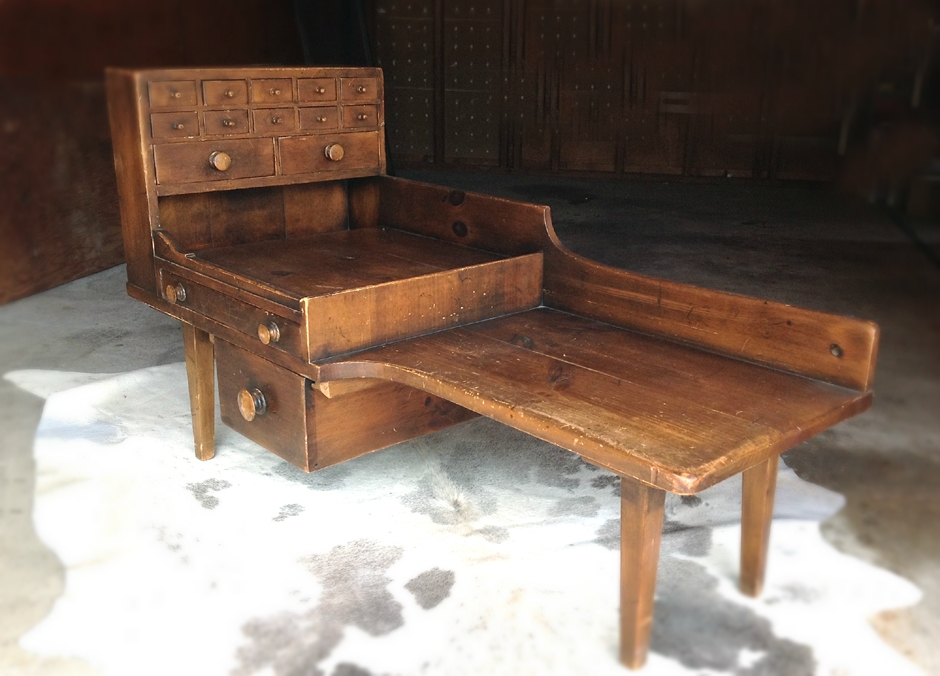
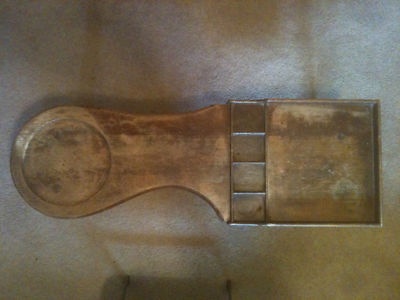
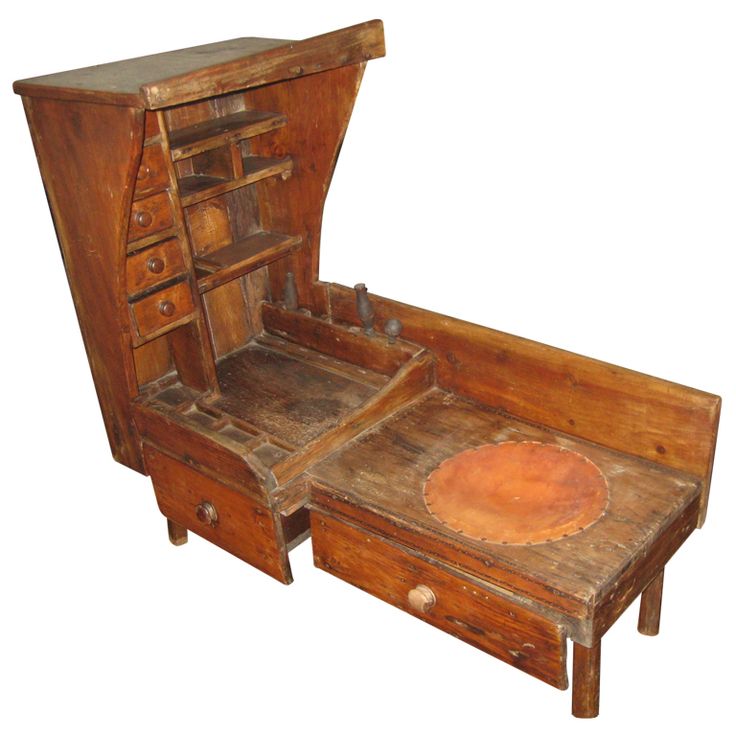
I have come across these little benches for quite some time and I find them fascinating. I even started a folder in my image library for them. A quick search around the web finds many of these in auction houses, on Ebay, Craigslist, and elsewhere, generally at exorbitant prices. It appears they generally end their long lives as side-tables in a middle class home, assisting in the creation of nothing; just a curiosity to a collector. They really are remarkable and interesting professional tools; clearly bespoke to the needs and means of the craftsman who used them. You can almost see their ancestry written upon them; a Roman or Medieval bench with simple splayed legs, a cutaway for seat, a little rail to keep tools from rolling away. Later some small tills might be created to segregate nails and needles, and knife slots added so that they might be handy but safe.Really, a simple slab of wood, but as “needs must” it becomes a little workshop, self-contained.
Drawers or cubbyholes became a natural addition to the workspace as the bench replaces tool caddies. Some can be locked up for safe-keeping and fancy builders made more comfortable seats.
The essential layout seems to always be the same. We are, after all, given the same basic human shape and the need is the same. Organization, convenience, and a solid place to work.I can see this type bench being useful for other crafts as well but it would definitely end up modified over time to suit the specifics.Even the above humble specimen has found a home, holding more collected crafts. Slowly dying as a curio for some of us to ponder as a useful holdover from an era when we made for ourselves.The designs seem varied as the places they originate and the ingenuity of the makers. Cordwainers, cobblers, leather bag makers, can all find the beauty in this design.Many a zapatero could still find great assistance with a shop setup like this.I could make great use of this as an itinerant craftsman. And maybe I shall someday. Perhaps, by looking into the past, we are seeing a better, simpler future
Cobbler at work, no citation, no date. Click for “source”.
“Round and ’round the cobbler’s bench, the monkey chased the weasel…”
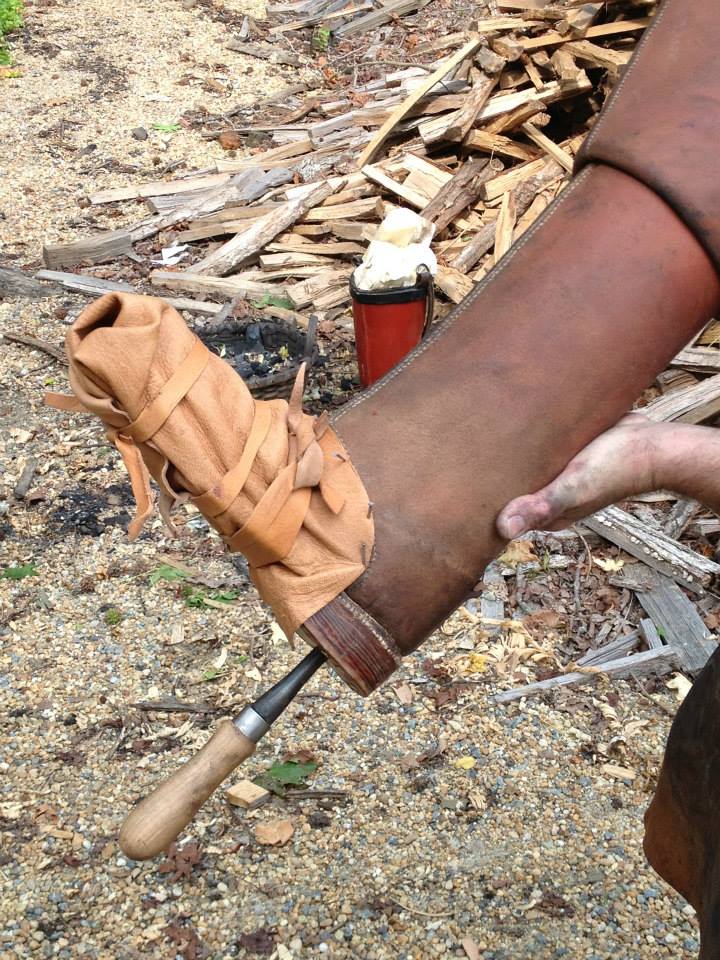
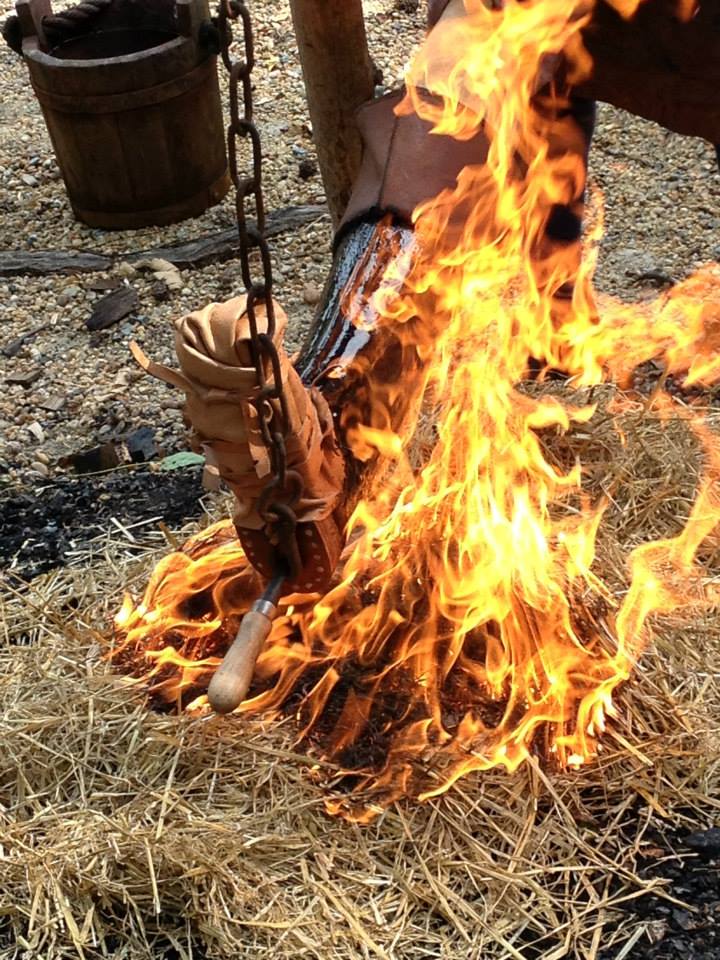
The Shoemakers’ Shop of Colonial Williamsburg, Virginia has posted an excellent photo-essay of making a pair of 18th Century Jack Boots. Their leather work is phenomenal and shows real craftsmanship. Any leather worker can appreciate this even if they never intend to make a pair of shoes. This pair is particularly interesting with the fire-tempering and waxing that occurs. Their research is in-depth and is well documented.
Stages of heating and finishing the boot.
Perfectly stitched in the traditional manner.
The upper coming together.
Ready for waxing.
A judicious use of heat. The grass keep the temperature relatively low.
A finished specimen. Ready for riding.Have a look at their Jack Boot page. There is commentary with each photo. While not full of detail, the images go a long way to understanding the process.











 Preindustrial Craftsmanship