Remodel of the Little Green Vardo, Part 2

Preparing the trailer and laying the foundation for the Vardo.

A couple of issues had to be addressed before any real construction could begin.  Unfortunately, a day job and early sunsets dictate my work hours so I only have a short time each night to get something done throughout the week.  Here’s the summary:

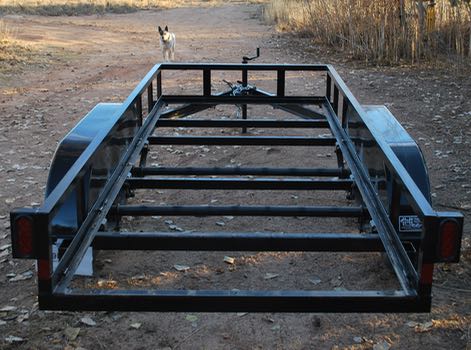
DSC_0003 (3)
The fresh slate, as delivered from the factory.

The trailer arrived at about 990 pounds.  I liked the floor but the extra weight was not desirable.  I was going to need to lift the old ledge body about 1 1/2″ anyway (to get the current ledges over the welded rails) so I decided to replace the original floor with a wooden frame to provide the proper height.  Does anybody want to buy some 2 x 8s for cheap?
Unnecessary floorboards removed.

A half hour of work, after locating the proper T40 screw driver head for the drill, and the boards were free.  Removing the floor boards from the flatbed relieved us of 209 unnecessary pounds, bringing the trailer down to about 780 pounds.  That weight-savings can be better used elsewhere and we already have a plan for it.

DSC_0004 (2)
Test fitting the treated lumber under-framing to build upon.

I’m not a fan of the chemicals in treated lumber but I bow to it’s remarkable ability to survive some pretty harsh treatment.  My desired dimensions overhang this trailer by a couple of inches and this was a pretty good way to support that plan without compromising any length.  Every inch counts, right?  Before you ask, the asymmetrical layout is due to old habits of building on standard centers (16″ in this case).  It will only really benefit the laying down of the sub-floor but it saved me some arithmetic.  It’s comforting to slip back into zen construction mind.

The coming weekend will hopefully yield some real progress as we are now coming into the difficult bit… moving the old vardo onto the new frame.

If you are looking for Part 1 of the rebuild/addition then CLICK HERE.

ON TO PART 3

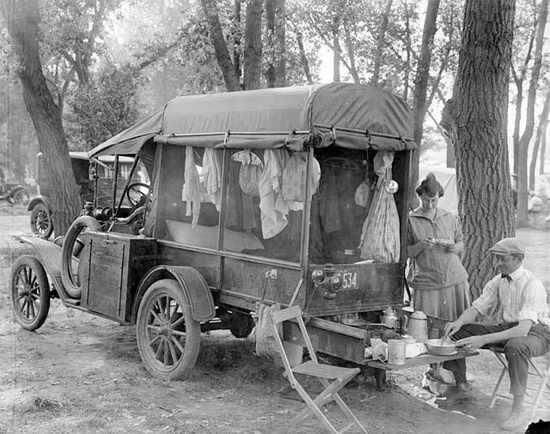
A 1926 Home Built Camper Truck

An early tiny house on wheels… and a family selfie.

W.M. O'Donnell & family of Detroit in bungalow auto, 2/1/26.
W.M. O’Donnell & family of Detroit in bungalow auto, 2/1/26.

The Library of Congress has some pretty amazing stuff.  I rarely find what I came for but I always find something pretty spectacular.  This house (click to enlarge) is quite a piece of woodworking.  Shingle siding all glass door, sturdy balcony, beautiful windows, under storage, and what I think is a pull out pan box on the back.  The O’Donnell’s were certainly traveling in style.

The amount of joinery that went into the door and windows is probably more than found in most houses today.
W.M. O’Donnell & family of Detroit in bungalow auto, 2/1/26

The amount of joinery that went into the door and windows is probably more than is found in most houses today.  I really like the old basement windows used as storage access underneath.  As usual, I could find no interior photos but I suspect it was well appointed.

Original files can be found: http://www.loc.gov/pictures/item/npc2008007978/and http://www.loc.gov/pictures/item/npc2008007936/

If this isn’t inspiring, I don’t know what is.

Oh, and nearby photo caught my eye in the Library:

Mlle. Rae with garter flask, 1/26/26.

I’ve never known a woman with a garter flask before…

Finally…

A perfect rolling home.

And a place for everything!

Bundesarchiv. Bild 183-1987-1002-510 Foto 1 November 1922.

The details here are remarkable including the decorative framing around the windows and planter boxes … with plants!  I believe this sits on solid rubber teeth-rattling tires.  You can probably tell from the caption but this is apparently from Germany in 1922.  I wish I knew what the function of the trailer was; workshop, spare bedroom, animals, kitchen?

Hamlet, A Tale of the Road Less Traveled

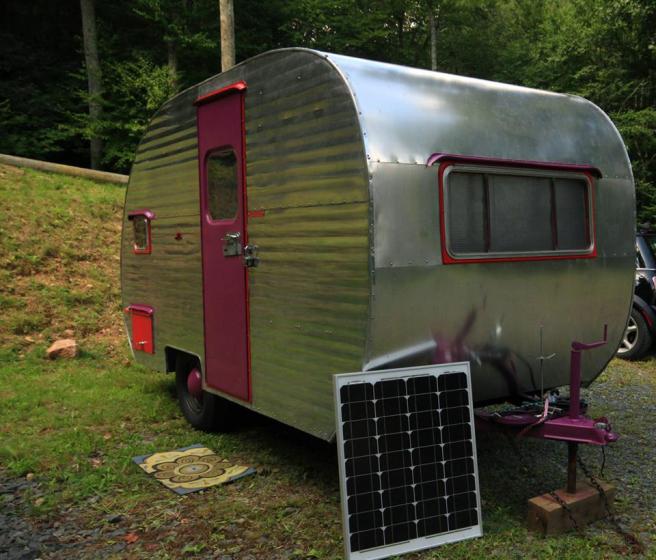
A mid-40s couple restores a tiny canned-ham trailer, leaves their mundane careers, and takes off on a journey across the continent.  Sounds pretty good to me.

When it comes to making enough money to get by, the two have a unique system.

“In our ideal setting,” Hutchison explains, “is four months of working somewhere, [or] four months of volunteering somewhere, and then four months of traveling.”

The little trailer has a Facebook link.  See more images and the restoration by clicking the photo above.
The little trailer has it’s own Facebook link. See more images and the restoration by clicking on the photo above.

FROM THE VERMONT PUBLIC RADIO ARTICLE:

“Many people spend most of their day in an office, and I was really, really tired of that and being tied to e-mail and my calendar.” Galiardi explains.

“We both had challenging careers,” she says. “The challenges were becoming, ‘How much more can I fit in?’ Rather than [fitting in] what I really want to be doing.”

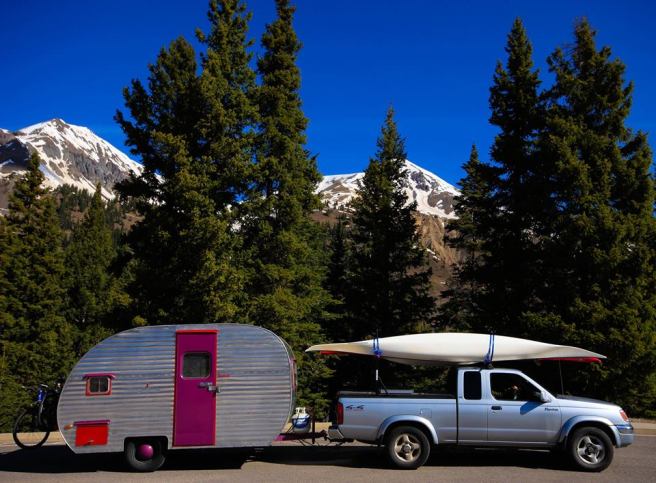
Now the couple uses the trailer as a home base, spending much of their time outdoors: kayaking, biking and hiking.

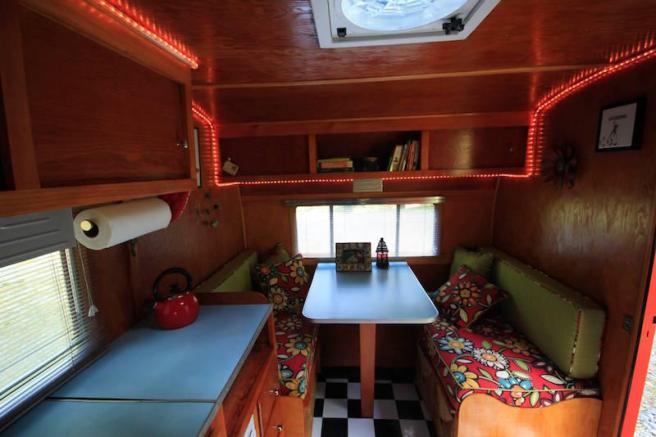
interior
Dinette area.

On fitting the few things they own into a tiny space:

“It’s a lot like a sailboat. In that, everything has to have its place,” says Hutchison. “When you go look for that thing, it’s there. And then it goes back there when it’s done.”

ontheroad

If you are interested in learning more they have been keeping a blog of their adventures over the past few years.  You can read more by clicking here: Tales from a Mid-Lifeventure.

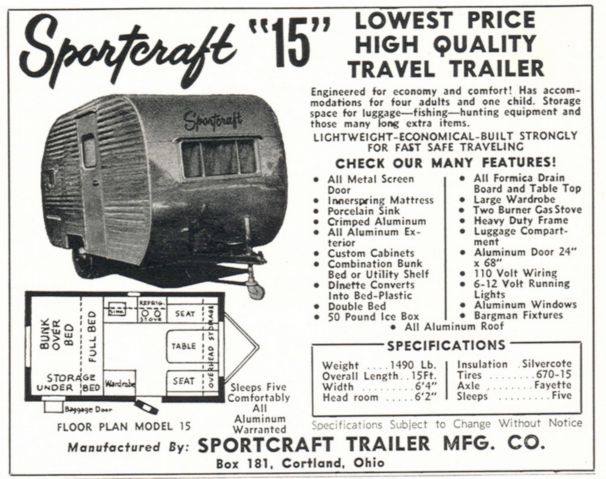
advert
Home sweet home.

Another Look

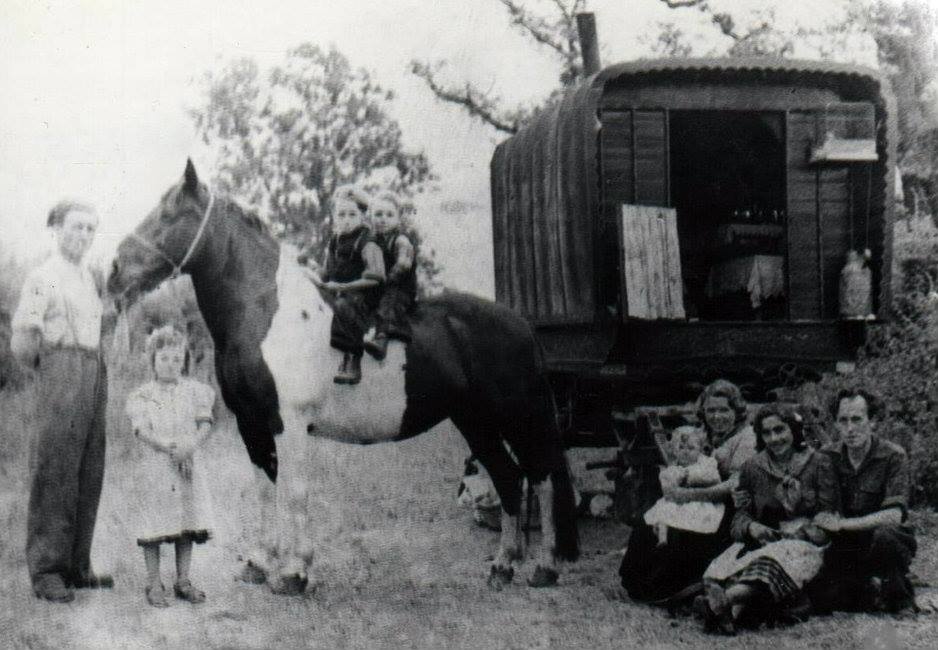
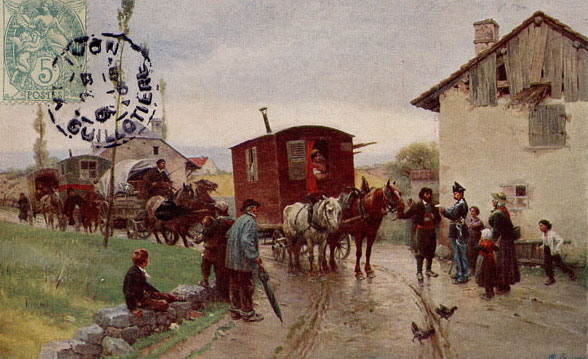
Here’s another look at an image I posted quite a while ago.  I really like this photo.  These Scottish Travellers give a glimpse of some less-than-stereotypical living waggons (sic).  Very few wanderers could afford the classic Dunton Reading wagon but made do with more affordable accommodations; possibly even owner-built.

Tyne & Wear Archives & Museums. Click image for link.
Tyne & Wear Archives & Museums. Click HERE for the source.

All three of the caravans pictured have mollycrofts for light and air but are of a pretty simple variety.  I am struck by the one on the right mostly by how plain it is (plank siding without exposed ribs) and it’s very small proportions.  I suspect there were many more of this variety than the elite, custom-built wagons on the roads in Britain in the heyday.

A few more Vardos (sort of) from Around the Web

squaretop

I’m always keeping an eye out on the web for interesting living vehicles, rolling homes, and related Traveller – Modern Nomad stuff.  The right key words and a little luck on historic image sites land a lot of photos, but often with little real information about the vehicle in question.  As I was rummaging through my old image files over the weekend I decided to start throwing some of the images up here; for inspiration and ideas if nothing else.  Where possible, I’ve linked to the source where I found it.

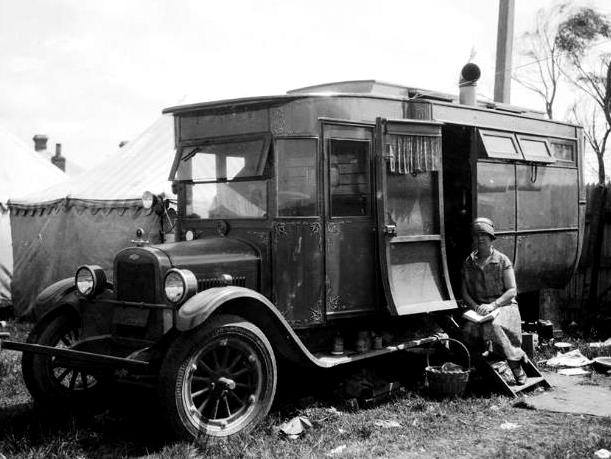
carnieconversion
This is an interesting conversion for a Carnival or Circus worker. Wood burning stove, mollycroft, and transom windows. I like it.
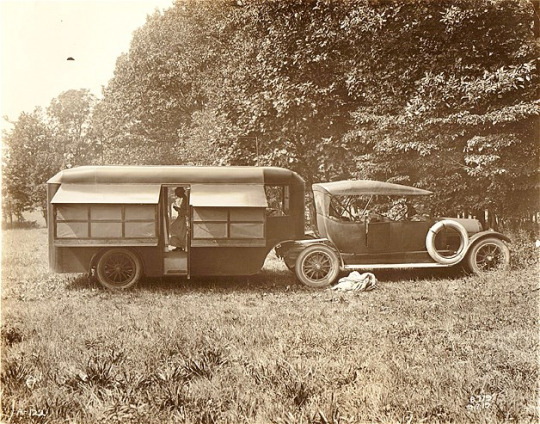
earlycaravan
I’ve posted this innovative little beast on Facebook.

I like this early fifth-wheel design for several reasons, not the least of which is the hitch.  This is the earliest image I have of a “slide-out” expandable space.  I suspect they actually fold up but they already deal with increasing space while keeping the traveling width narrow.  The final feature is the dogtrot effect created by the opposing doors.  I think this caravan was built with summer travel in mind.

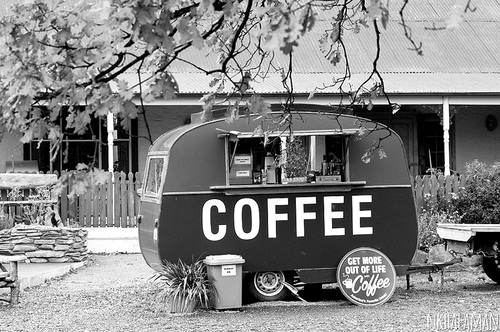
coffee
Recycled “canned-ham” caravan.
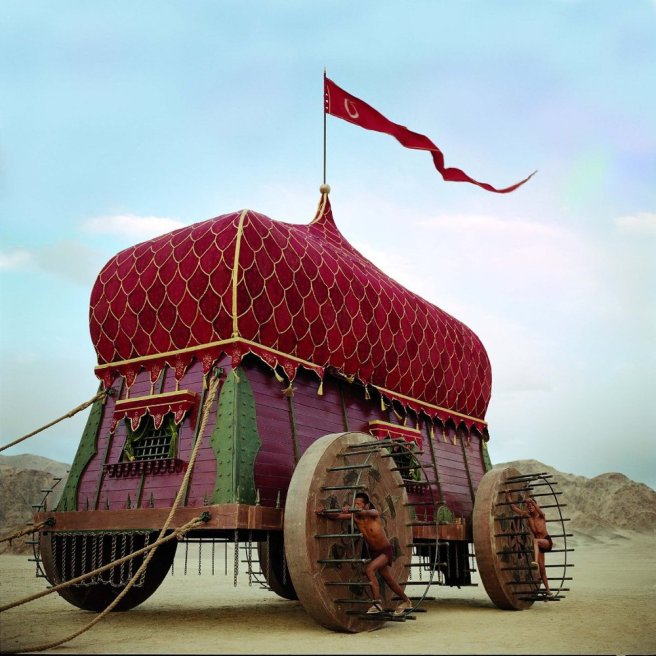
Interesting propulsion.  Looks like post-apocalyptic servitude?
Interesting propulsion. Looks like post-apocalyptic servitude?
Atkisson's Wagon.
Atkisson’s Wagon.

The above wagon aesthetic has a Persian feel to the decorations.  From the pillows right down to the slippers.  Click the photo for an article about this wagon.

Found over at the Voice of the Monkey.
Found over at the Voice of the Monkey.  An eclectic image blog.

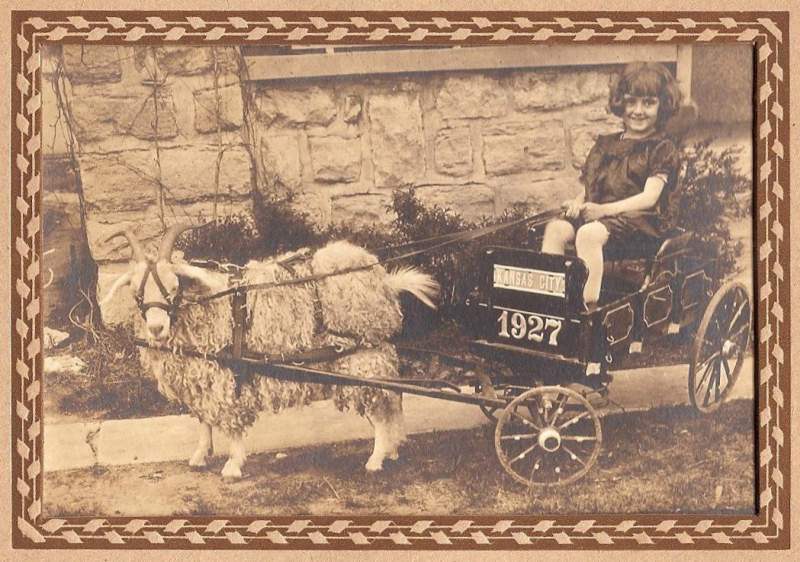
Okay, I just posted this cool little goat wagon as I would have loved this as a kid.  Who wouldn’t?  There is a clear attention to detail on this one down to the wheel spokes and fine paint work.  Apparently there is some tie to Kansas City.   Maybe a carriage maker’s model?

And finally, the best part of all… exploring a 1914 Dunton Waggon, Part 1 with historian John Pokkett.  You can find the next parts on Youtube if they don’t auto-follow.