The modern banjo has ancient roots and shares much with it’s African antecedents. Its connection to the lute family along with the whole array of drum-headed cousins crossed many lost cultural boundaries in ancient times. This makes it the perfect candidate for bridging musical genres and styles, from the Sub-Saharan and Arabic music the banjo, with it’s almost ever-present drone string, morphed into creature we know today. Most non-players only know it from the post-war music known as Bluegrass or maybe even Old-Time Country but there is, and always has been, a broad range of music brought to life on this bright and varied instrument.
Cowboy Singing – Thomas Eakins
I read somewhere long ago the real instrument of the American Cowboy was the banjo due, in part, to the timing and population of the very people who became cowboys. Forget the 1950s movie stereotype, most cowboys were freed slaves, their offspring, or poor younger sons of Euro-Americans looking for a job and adventure. Those who were not were likely caballeros from old Mexico or the west in general; they brought most of the guitarras to the scene.
Thomas Eakins, Home Ranch 1888
Where I was going with this ramble was that the humble little banjo can do more than Mumford and Sons or Yonder Mountain String Band patterned rolls. Nifty and tight as they may be, some of us want to reach beyond and find the real soul in our hands. Don’t get me wrong, these are fine musicians, but really just one narrow style in a giant spectrum of sound.
Here’s a great example. What could be better than Bach and banjo?
I suggest checking out more of Mr. Raphaelson’s videos if you want to add a little novelty to your listening lineup. Whatever your instrument, love it, learn it, and expand upon it.
Since we opened the post with a banjo beauty shot, it seems appropriate to end with one as well. I love this inlay, by the way.
This post was prompted by a few photos I recently took to document some of my projects.
I fully disassembled , repaired some problems, refinished, and did a full set-up on my Banjo. Not surprisingly, it was a bigger job than I hoped for but really paid off in the end. When I built this one several years ago it was something of a rush job while working and traveling so some details were never attended to as they should have been. The action now is great and the fretting couldn’t be better in my opinion and I already see some real improvements in playability. I’ve been happily sneaking in a little practice after breakfast on most days and even a little at lunch if I’m motivated. Finally, I’m coming back to becoming an actual player reviving skills from 30 years ago. I’m a little sad that I ever let music fall out of my daily life but better late than never I suppose.
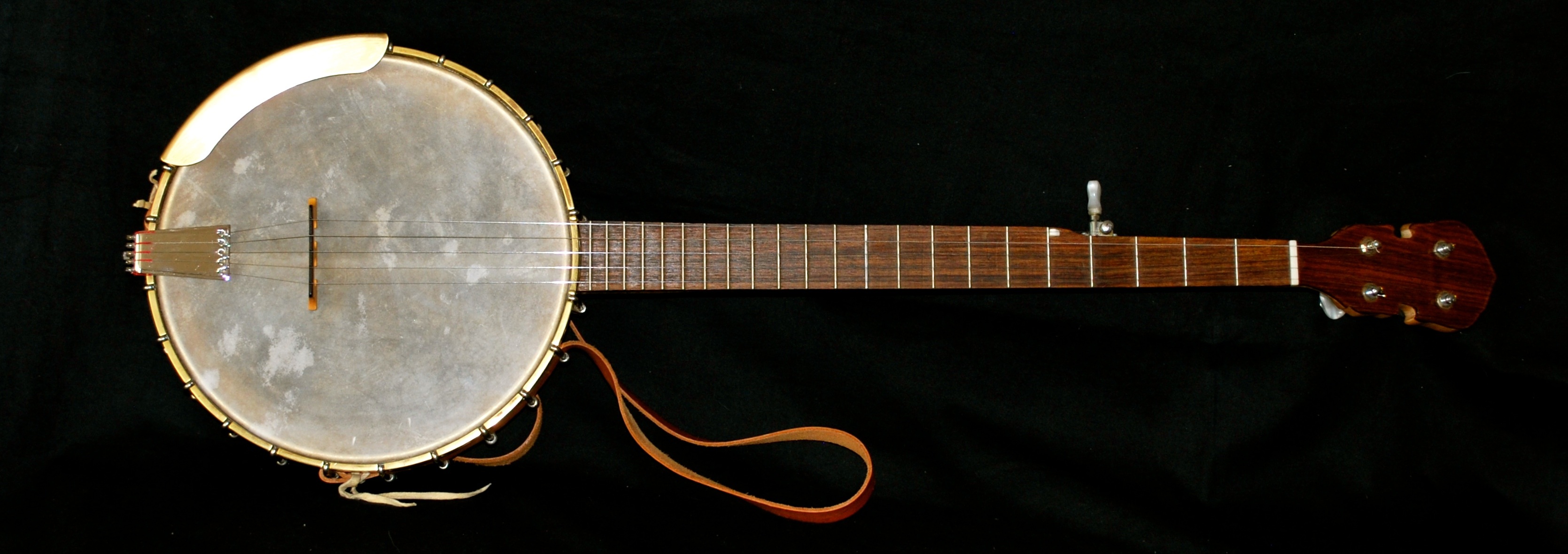
Plain and simple; a little like me. I laminated the wooden ring from shagbark hickory with walnut inside and out. The tone ring is a Vega Whyte-Laydie design.I have never inlaid anything but I think I might give it a try sometime. For now, the peg head is an unadorned Mastertone style.The fingerboard, heel cap, and peg head covering is rosewood over a maple neck. The flame in the wood is beautiful in this one.
I you want to read about the initial construction of this one, click HERE or on the image below.
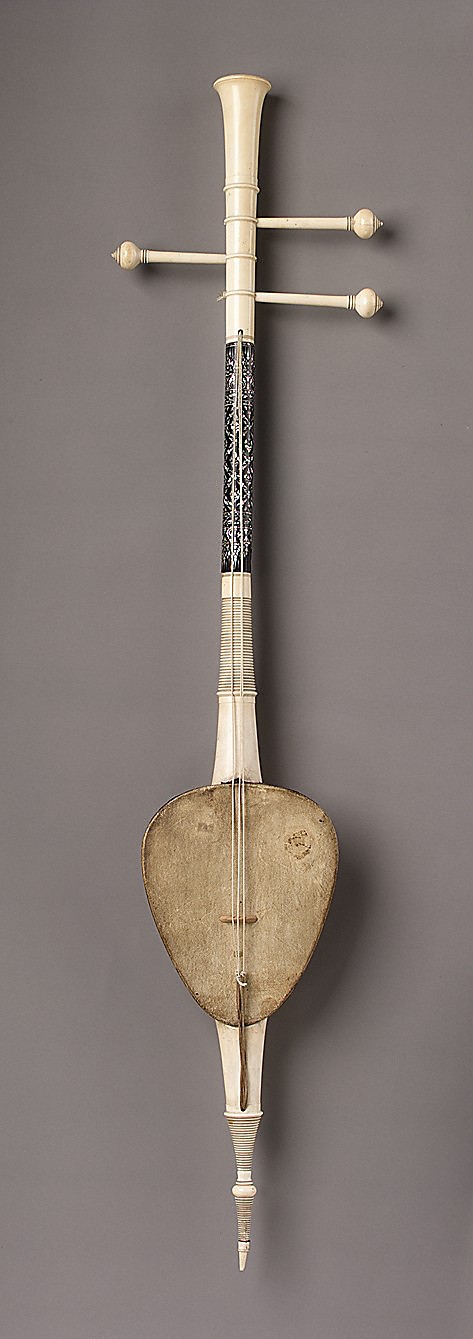
A little historical banjo for a musical Monday. Nothing comes from nothing. The banjo is truly American with roots in Africa, the mother of us all.
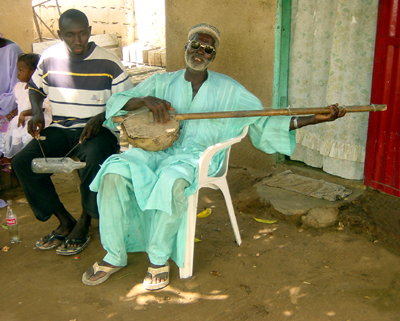
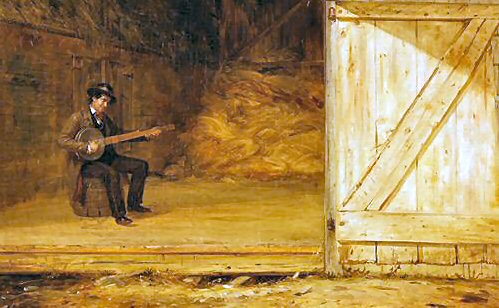
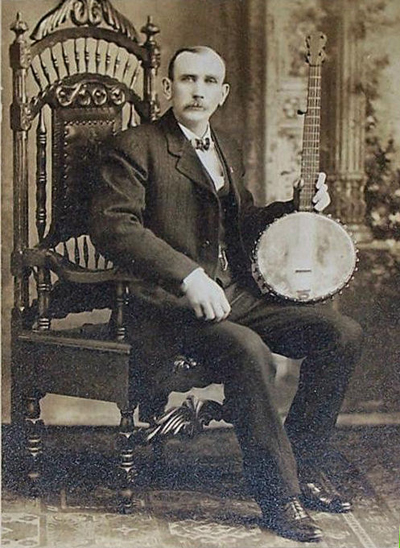
The Banjo Player by William Sydney Mount, 1856. Click the image for some info on early banjo sources.Manjak bunchundo master Francis Mendy. Banjul, Gambia, 2004 (Photo by Ulf Jägfors). Click the image for more information about this three string lute and other banjo cousins.An interesting article on NPR about the akonting: a three-stringed instrument with a long neck and a body made from a calabash gourd with a goat skin stretched over it.A lonely but beautiful image of a lone musician.
A post I’ve been hanging onto; a bit off-topic, personal, and possibly without any point.
My most recent banjo polished up and fitted with a new calfskin head.
I am an unlikely banjoist. I got a very cheap banjo when I was 14 years old but didn’t find a teacher. I took a couple lessons from uninspired twenty-somethings but didn’t get much from them. Fortunately, this didn’t stop me. There was even a old neighborhood guy who offered some help but it turned out he only strummed a tenor-jazz-banjo. He may as well have played a ukelele for all that it mattered to me. So I learned by listening and from the few books I could find that suited my interest.
I don’t even know why I picked banjo particularly, but I did. I was fortunate to be a latch-key kid from and early age, so when it wasn’t sports season, I cherished my solitary time after school. I would often sit in the kitchen or on the back porch and plink around, playing old folk tunes. I discovered Cecil Sharp and Francis Child and learned what I could about folksong of Western Europe and the British Isles. I found this very old and diverse instrument adaptable to lots of styles of playing having found it’s way from 18th century plantation shacks to Victorian concert halls.
My college instrument. Oh where are you now?
Coming from a classical music background helped. My dark secret is the I spent three years in college as a music major. I could read music and understood a little about musical structure so I spent time in the library digging through old folk music books and journals. I never became great but good enough to not be ashamed to play in front of people and had about an hour-long proficient set of Irish, Scottish, Appalachian, and Ozark tunes in my repertoire. Then life happened. I gave it up (mostly) for over a decade while traveling and working like a dog and trying to be a good father but without playing an instrument, I think I lost a little of my identity.
So the short story is that I’m back. Making time to do something I love has helped my mind immensely. I’ll never be Tony Trischka, Earl Scruggs, or Bela Fleck, but at least I have some music back in my life.
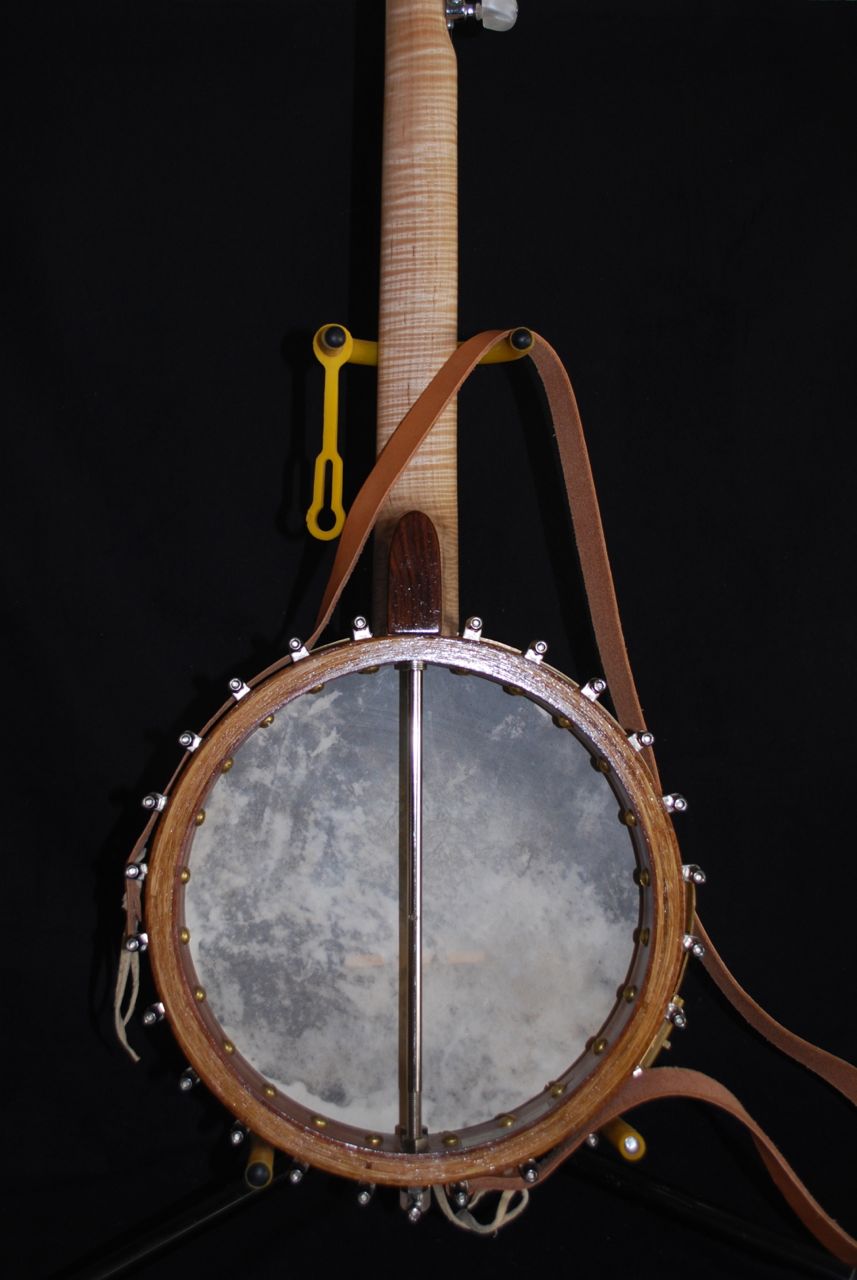
View of the backside to show off the beautiful maple figure.
For those few who may be interested in the technical details of this machine. My most recent instrument is roughly a Vega design with a White-Lady tone ring. The tension hoop and arm rest are plain brass and the head is genuine calfskin. The neck sports a Mastertone-style peghead taken from the diagram in Earl Scruggs’ classic banjo book. The fingerboard and peghead cover are cocobolo. The tuners are scavenged off my first banjo and are Keith planetary-type except one. The D string tuner is a replacement as someone actually stepped on my old neck and broke one! The replacement is a 5-Star from Stewart-MacDonald’s lutherie shop. These days I could get online and order one instantly, but back in the mythical pre-internet era this actually took some phone sleuthing.
Last winter I had an important epiphany about myself as a musician. I am under nor delusion that I will ever be more than a closet or campfire player. For me, for now, that’s going to have to be good enough. Although I love the fiddle more than any other instrument, I went back to my roots and picked up a Deering Good Time five string banjo a couple years back to see if I couldn’t revive my banjo playing. I hadn’t really played much in over a decade but discovered that not only did the brain still remember some old tunes, but my big, beat-up fingers were actually still suited to it. Ham-hands I’ve heard them called!
Deering “Good Time” open backed 5-string banjo.
After playing the “Good Time” for a couple years, I felt I outgrew it as a player. Don’t get me wrong, it’s a great instrument for the price (ca. $650), American-made, and travels well but I just wanted a little more substance and a thumpier traditional sound. Not being able to afford anything fancy, and my playing not really being up to any professional par, spending a load of money I don’t have was out of the question. It became apparent to me that it was time to make something better myself. This isn’t quite as outlandish as it may seem as in my woodworking days in my early twenties, I made a couple banjos, a handful of mountain dulcimers, and some mandolin parts that were fair to partly decent instruments. Anybody who knows me knows I hoard parts and hardware so fortunately I had a set of tuners, some fret wire, a tension ring, and a bracket set for a banjo (obviously the universe conspired for this to happen). For the rest, a quick trip through the Stewart-MacDonald catalog located the missing elements (e.g., a White Lady Vega-style tone ring, brass arm rest, bridge, and tailpiece, as well as a maple neck blank and rosewood fingerboard, and a calf-skin for the head).
Unfortunately, time and energy were against me when I made the initial build last summer. I was traveling and teaching for the university while working on this so I didn’t document the process. So, I essentially built this one twice. Once, to have something to play while traveling over the summer, then a rebuild in the fall to tweak the set-up and put a better finish on it (tung oil). The photos don’t really do it justice here but hopefully, it gets the idea across. Making an instrument is a doable thing.
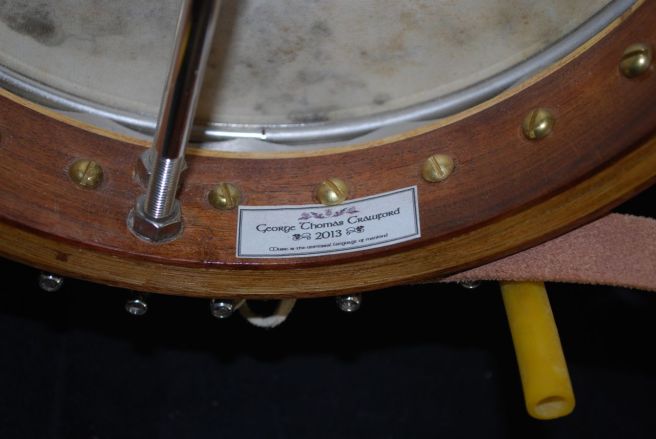
Banjo back to show construction. Steamed hoop comprised of three core layers of shagbark hickory with an inner and outer laminate of american black walnut. Neck made from a “flamed” piece of curly maple.
I won’t even attempt to describe the process and there are many better instrument makers who have done this before me (see the Foxfire books, Irving Sloane, Earl Scruggs and plenty of others).
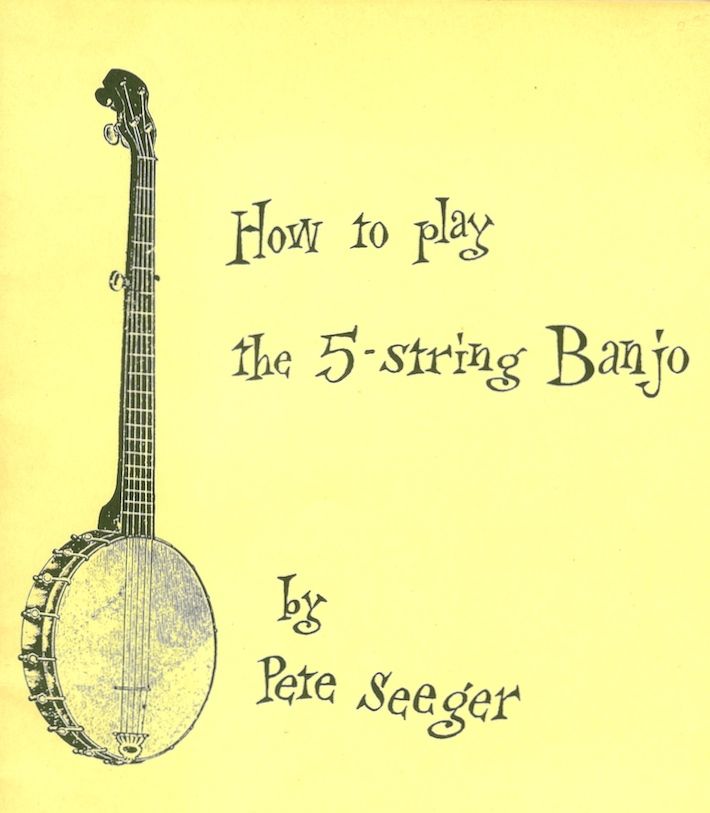
This book, and others, made instrument making an approachable thing for me 25-30 years ago.
To make a banjo, you essentially need a few, more-or-less mechanical parts, then find a way to attach them together in a fairly precise and meaningful way; that is to say a neck, complete with a fretted fingerboard and tuners, and a drum-headed hoop of some type. Having some experience with steam bending, this part was not as intimidating as it might seem the first time around. My choice for the body was a hickory core with walnut laminates for the outside.
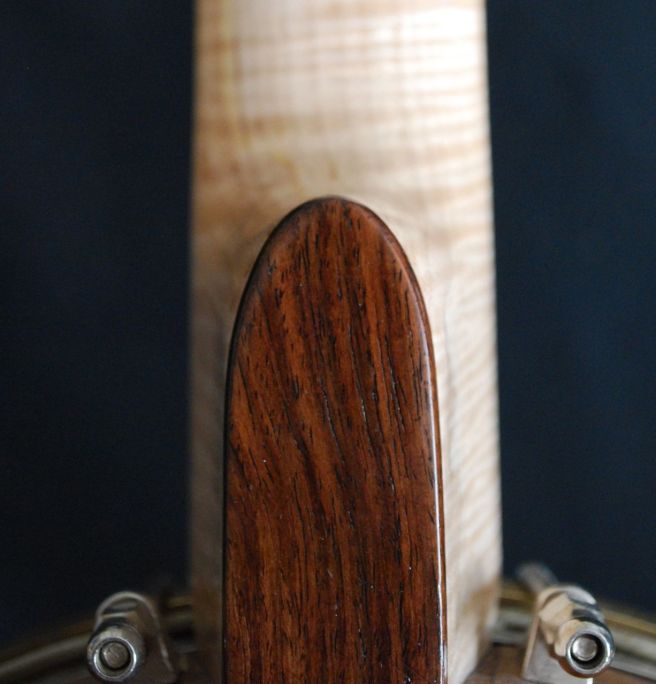
Plain headstock. Rosewood head plate, fingerboard, and heel.
These pictures already show the six months of use and she already needs a good cleaning. As can be seen though, there’s little ornamentation on the instrument; no inlay or bindings, just an octave marker on the side of the fingerboard. I did steal the peghead design from Earl Scruggs’ book where he stole and printed the Mastertone design himself. It was just too classic.
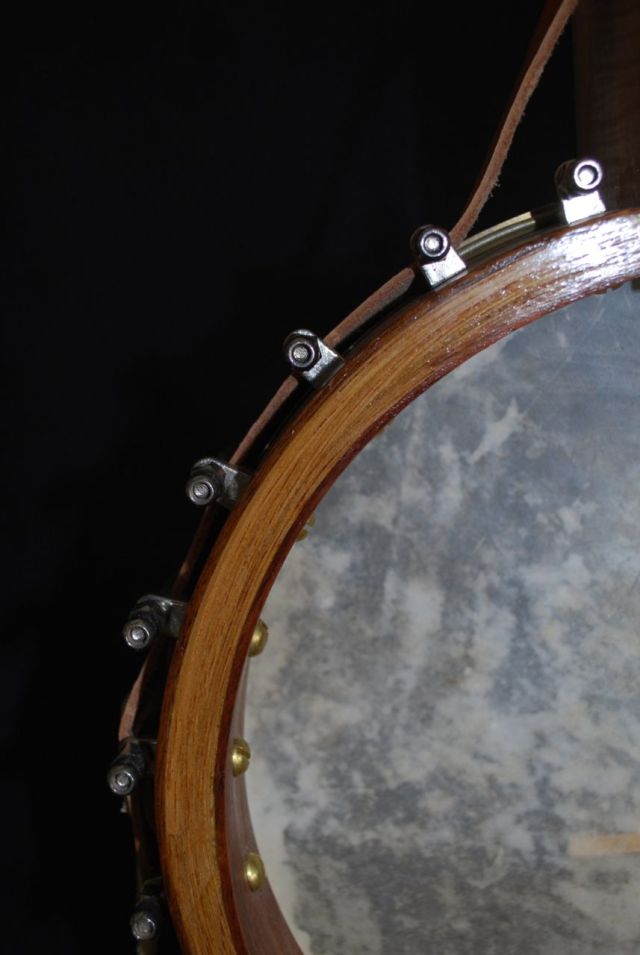
Rim detail to show laminae. Core (3) are hickory, outer and inner are walnut.
I had intended to veneer over the back but after completion, I liked the raw look that shows the construction. Maybe I’ll change my mind about this later but for now, this is it. The calfskin head can be a finicky when traveling as it is affected by humidity. Some players remedy this with a thin layer of spray-on silicone. I may try this in the future just to see how it works.
This photo doesn’t do the maple justice. The Flame is very nice in the sunlight and has some real depth.
I rarely see a reason to hide a beautiful wood grain.
Rosewood heel cap made from a scrap. No necessary, but gives it a finished look.Detail of “the pot” as the body of a banjo is called. The walnut is s little bleached out in this image.
The components that make up the pot of the banjo are illustrated above. From right to left: brass tension hoop, edge of the rawhide over wire, nickel-plated tone ring, tension brackets, and wood hoop. the armrest is just visible in the lower right.
It’s remarkable how fast the weight adds up. 24 brackets, brass screws, tone ring, tension ring, tuners, and armrest make for some significant weight. I think it’s a good idea for any artisan to sign their work, even if it’s never intended to sell. This separates the hand-crafted from the mass-produced and show the care and the soul that goes into a hand-made work.













 Preindustrial Craftsmanship