The shop has been a little slow with outside projects and day work taking over my hours. However, I do get a few things done along the way and some projects are coming to a completion. I have a load of FLINT & STEEL fire kits on the way for late winter purchase and have put the first up in the shop today (https://www.etsy.com/shop/LostWorldCrafts). There are a surprising number of steps to getting even a simple composite toolkit like these together from the metalwork, leather cutting, dying, sewing, adding the findings and closures, and finally photographing to get them posted in the shop.
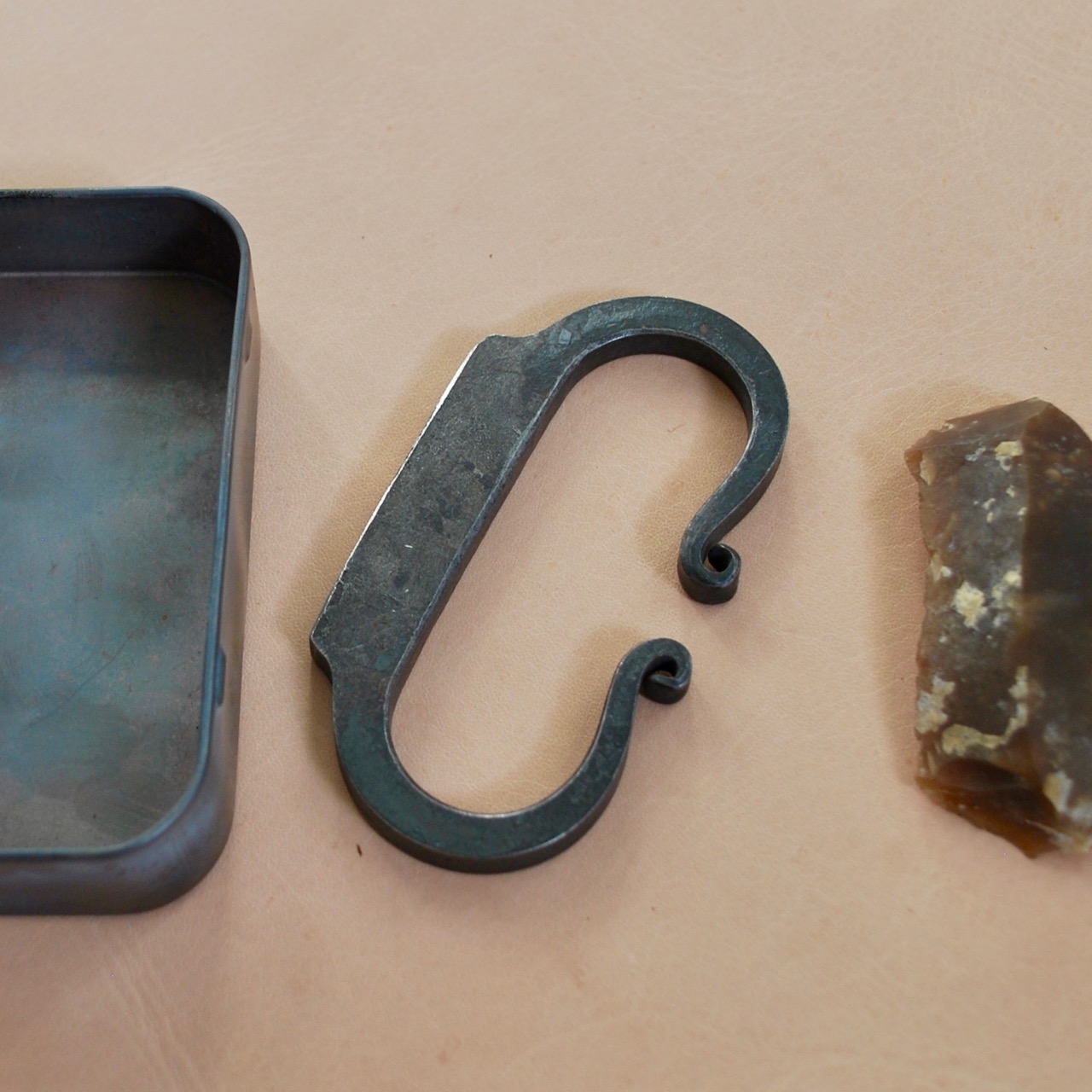
Fire Steels from Eric Bartch of Colonial Iron.
I had already designed the pouch style early in the summer and a few sold quickly so my next step was to get some high quality fire steels from within my Maker Family. I put in the order with my old friend Eric and he produced these extremely beautiful strikers for the project.
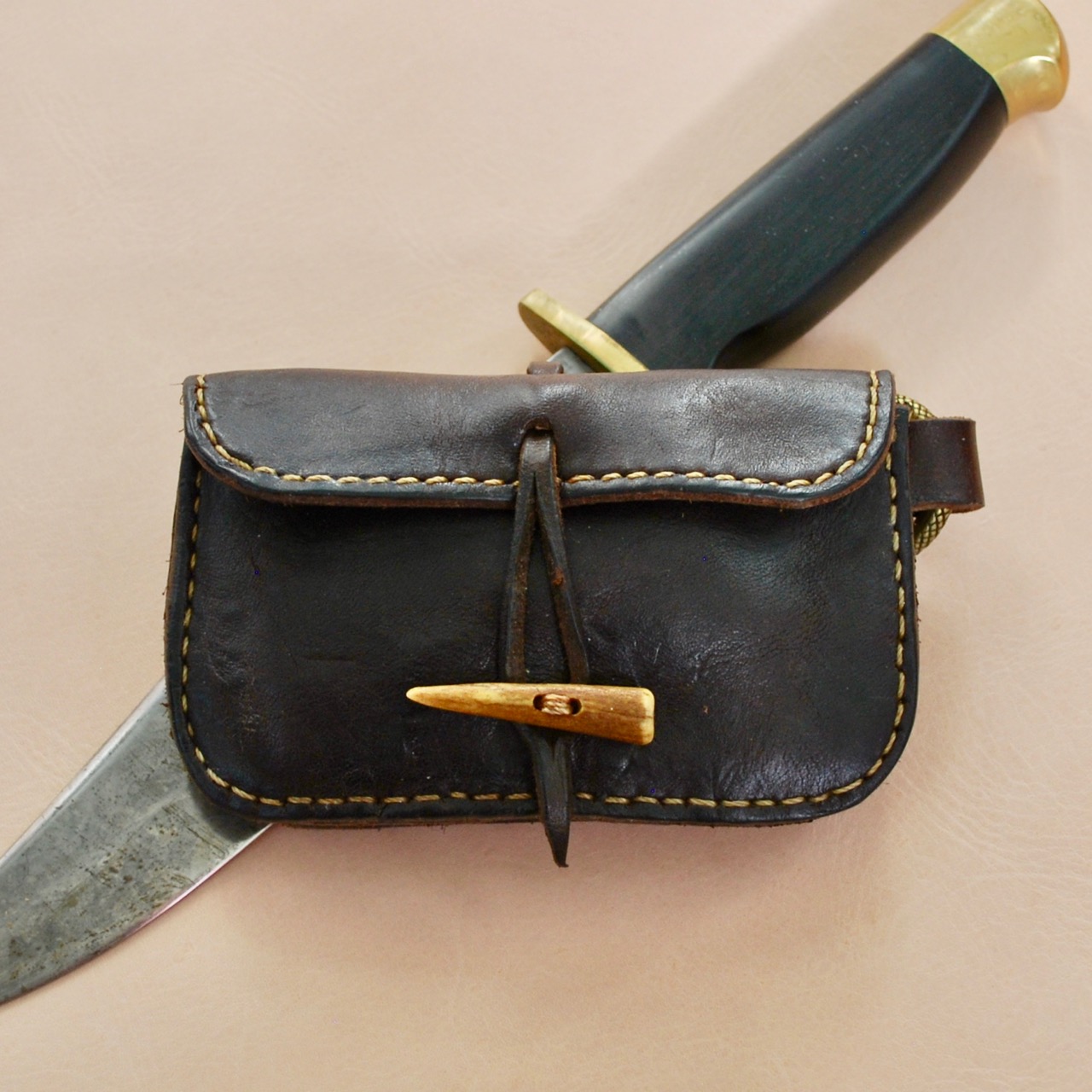
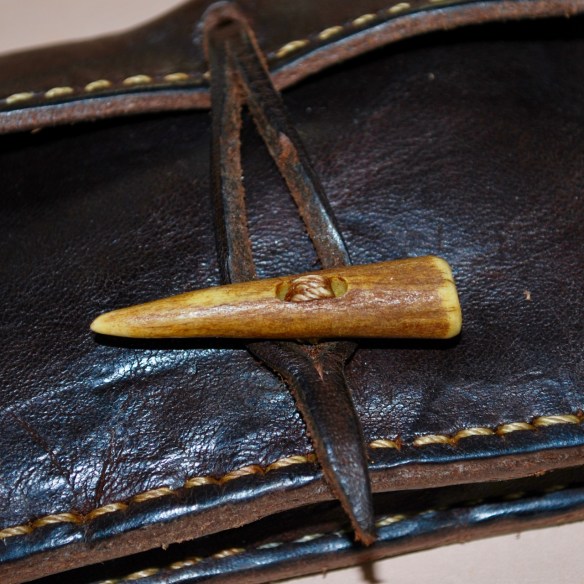
Simple pouch design that I feel is perfect for my fire kit.
I decided to sew up this round without measuring or marking the stitch line to give them a rustic look. I have mixed feelings about this so I may go back to the more uniform looking stitch marker for the upcoming bags. Each bag will be a little different, with variations on the closures and any added features as whimsy strikes me along the way.
Recycled tinderboxes are an affordable and sturdy option.
If you aren’t familiar with flint & steel fire-making the tinderbox serves a two-fold purpose; to provide a chamber to make charred tinder and to hold and protect the tinder from moisture over time.
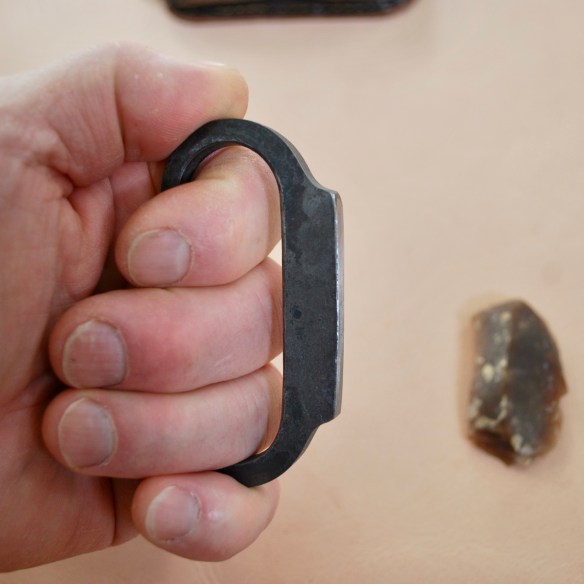
The striker doesn’t have to be this beautiful to be functional but to have both form and function makes for a loved tool.
To up the ante, so to speak, on this kit I included a flint from Knife River North Dakota. Some real primo stuff. Needless to say, the high carbon steel strikes very well and produces great sparks. A kit like this will become an heirloom and will only improve with age.
Form and function.
As always, my designs are informed by 18th Century style and are designed for hard use in the wild. If you are interested, wander over to the shop or follow the blog to find out when the next round will be in the market.
I know this year has been very strange for most of us but please remember…
Life is Short. If you’re fortunate enough to live with the means and privilege and food security, consider yourself lucky. When I feel low or unhappy, I always want to remember the people subjected to abject poverty worldwide through no fault of their own. It seems that the privileged, the comfortable, and those with the least to complain about are the most vocal and judgmental and superior. Please, be kind.
One final paragraph of advice: […] It is not enough to fight for the land; it is even more important to enjoy it. While you can. While it’s still here. So get out there and hunt and fish and mess around with your friends, ramble out yonder and explore the forests, climb the mountains, bag the peaks, run the rivers, breathe deep of that yet sweet and lucid air, sit quietly for a while and contemplate the precious stillness, the lovely, mysterious, and awesome space. Enjoy yourselves, keep your brain in your head and your head firmly attached to the body, the body active and alive, and I promise you this much; I promise you this one sweet victory over our enemies, over those desk-bound men and women with their hearts in a safe deposit box, and their eyes hypnotized by desk calculators. I promise you this; You will outlive the bastards. Edward Abbey
“Edward Abbey from a speech to environmentalists published in High Country News, (24 September 1976), under the title “Joy, Shipmates, Joy!””
The Tobasco Donkeys, a little known musical group working at the Philmont Scout Ranch recorded a song using Abbey’s words in one of the verses. It fits well.
Let us begin the winter feasting season in the old north. Not just a Scottish or Christian holy day, much of Europe is tied to animal slaughter and feast days to kick off the long dark season. From and anthropological and historical perspective the feast itself is thought to be a Christianisation of Saturnalia and Samhain festivals. Give a Scot an excuse to eat, drink, and be merry, and let the fun begin!
And finally, I leave you with Clanadonia and the excellent montage and music from www.scotland.org. I certainly hope to visit again someday soon.
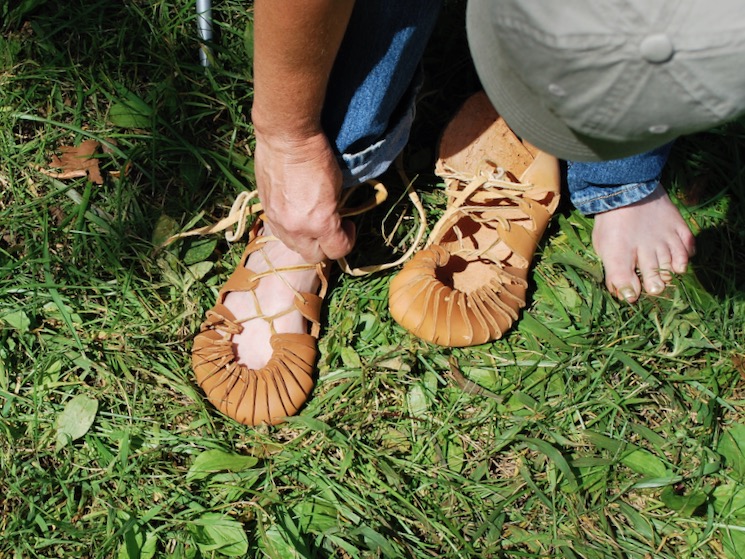
Here are some throwback photos from Ghillie shoe making classes from 2009 and 2011. The first pair is from a small class at the Bois d’Arc Rendezvous in southwest Missouri (note the lush green of late summer). Maybe not as sexy as the arrow-making class but it is a very real and useful skill. I have been honing the teaching method since I was taught how to fit and make these back in 1986.
One of the appeals this design has for many people is that they require very little sewing. If you don’t work with leather regularly, stitching can be intimidating. Some careful cutting and you can make some stylish shoes in a short time.
An hour of work and you’re ready to walk the world. More importantly, with the knowledge in your head you can always make more and keep right on walking.
These ratty old moccasins have spent a lot of time in the woods. These have been my winter moccasins for over two decades. I can’t remember exactly when I made them but it was a quick and dirty sewing job. They have been re-soled at least twice and need it again. The uppers are an oil-tanned leather I bought from a saddle and boot maker supply house I found while driving through north Texas. As can be seen, the tops can be worn up or down. They aren’t beauties but they are definitely ME.
This is a requested repost of a series I did almost five years ago when I took my eight foot single-axle vardo caravan and reconstructed it into a 12 foot body on a robust tandem trailer.
After adding up the mileage from the log book I keep with the Vardo, I see we have clocked over 21,000 miles since she was first put to the road in February of 2010. I have, no doubt, missed some small side trips and there are excursions I know I forgot to record, but this is, more-or-less, where we stand. The trailer frame itself was high-mileage but well-maintained when I acquired it back around 2002 having first been owned by a university, then by a private individual before coming to me.
My “before” photo. Rated at 2,000 lb. gross vehicle weight. It was solid and well-built but already showing some signs of age and life in the salt air of the Pacific Coast.
The real beauty of this trailer is the square tube construction and heavy-duty hitch. Starting small was wise for me as it constrained the build and forced me to squeeze every inch out of the design.
On the way to becoming the “after” photo. The full box body nearly done.
I eventually replaced the original jack with a more heavy-duty model and replaced the jack wheel with a large foot for stability. For safety, the tires were replaced when the trailer was re-purposed due to age, not wear. If you missed it and want to read more about the construction of the micro house we call a vardo, GO HERE.
The Vardo; Where are we now? What do we want?
This little living wagon is great and serves it’s function well. It’s a little beat up and showing it’s miles; living and traveling in all weather, a lot like it’s owner. But still, it’s a little homey shelter from the elements, providing all the necessary comforts, and making travel a breeze. With about 49.5 square feet of living space inside (4.6 sq. meters) it is spacious for one and comfortable enough for two adults who do most of their activities outdoors. However, I have long pondered placing my vardo on a longer trailer, either to gain cargo space for tools and the like OR to extend our living space. Sticking with the Minimalist thinking, I decided long ago that 12 feet was about the maximum I want in a trailer. With a standard 4 foot hitch that makes for 16 feet (4.9 meters) dragging behind the truck or about the length of a second truck. I did the math on the new space and I liked it.
So back to it. What do we really need?
Thinking of the many scenarios we find ourselves in, some added amenities could be handy in certain situations. From wilderness areas in Utah to posh campgrounds in San Diego, highway rest areas in the Midwest and museum parking lots in Santa Fe, or even stealth camping on a city street, our needs are varied. Although the vardo was built as a wilderness base camp, sometimes it feels like a miniature fortress or space station or temple of solitude. When we’re camping in the remote west, beyond the confines of civilization and snooping gawkers, it’s not a problem spending most of our time outdoors, using a campfire or cook stove to fry up some bacon and boil some coffee, but try that in a grocery store parking lot in the city and you will only find trouble. But we still essentially live outdoors. We don’t need a dance floor inside.
Two thing we want that this space can supply:
A simple kitchen. By this I don’t mean a Martha Stewart style, butcher block countertop with rotating spice racks, dual ovens and a six burner ceramic-top range. We need a dedicated space to store our cookware and food, do some prep-work, and make simple meals in any weather, beyond the prying eyes of the local gendarmerie.
Secondly, we want more storage space for our personal belongings when we finally hit the long open road and don’t look back. Tools for making things and raw materials alone take up a lot of our space. Leather, wood, sewing supplies, fasteners, etc. all require more space than we have. On top of this, a large, flat work surface would be a nice addition indoors.
After several (many) sketches and mock-ups… Voila! I think we nailed it, the vardo formerly known as the Snail reborn as Nautilus 78. Even though we know that nothing comes from nothing, our minds like to think of things as having a beginning, middle, and end.
So in that sense, here’s to our new beginning.
The new foundation. Tandem wheels, brakes, breakaway safety system, LED lights and 7,000 GVWR. Let’s hope we’ll never need this much trailer.
Too many badges, certificates and insignia. Still, and excellent buy I think.
First things first. The heavy wooden floor must go.
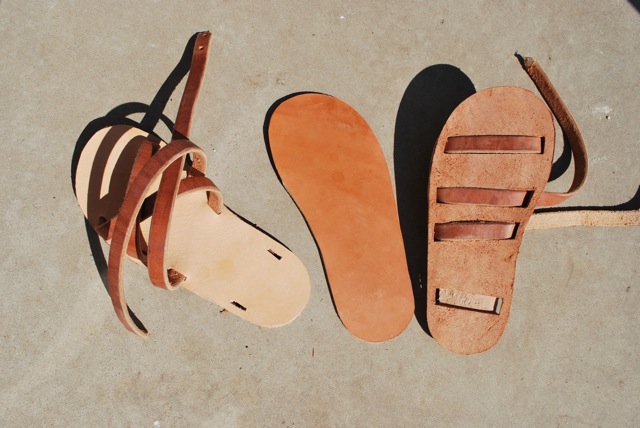
If you have ever taken a class with me you might know that all the intimidating sewing isn’t as bad as it looks. The sole is three layers thick but the use of a good, sharp awl makes the double needle sewing go quickly. A lot more work goes into these than I would have initially thought but I really think they come out great in the end. It took several pairs to get the pattern just right but research into design and construction led me to this final design. The sole is three layers thick (or more historically) and have been made this way in Europe and North Africa for more than 2,000 years.
The thickness of additional layers isn’t just to provide safety for the feet but the central layer provides a path for the straps to travel through without lumping under the feet. The parts consist of an insole (medium weight oak tan leather), mid-sole to allow tunneling the straps through, and an outer sole, in this case, leather. The straps are 48″ per foot plus the heel yoke.
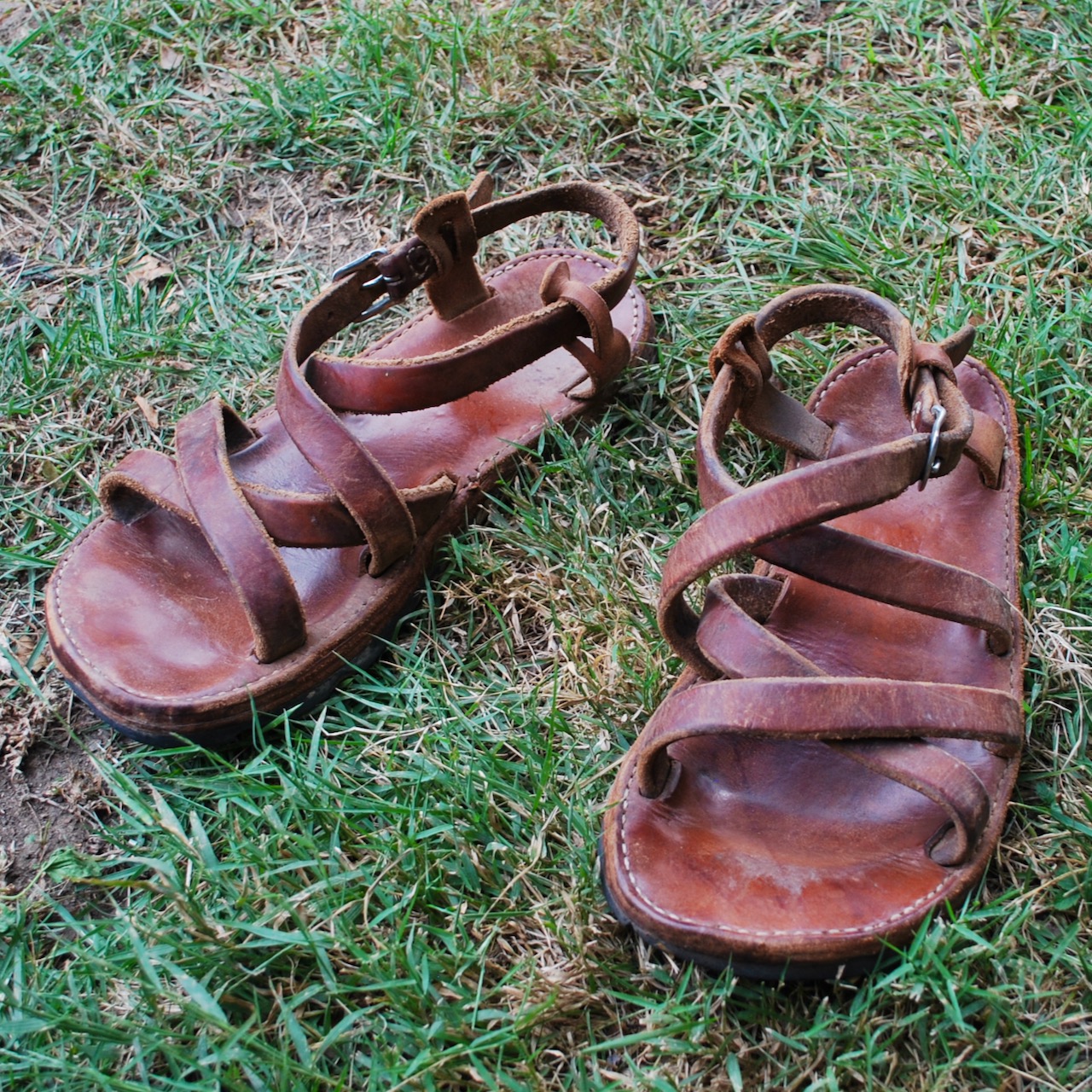
This is how they looked when I thought I was finished. Shortly after, I added buckles and have since been through a few more soles. Currently they are shod with rubber.
Nine years on and still going strong. The patina that good leather takes on cannot be simulated. They get a coat of dubbin every six months or so but otherwise, need little care. I hope to get back to a time when I can wear them daily again.
On a Cello Banjo no less! I gotta say, I’m not sure I’ve ever seen a Cello-size Banjo before but I like it! Robby Faverey has some amazing talent and I hope you check out more of his work on YouTube.
ENJOY!
If you are still interested at this point, check out more about him and his musical family from Suriname by having a look at his website HERE. Isn’t it fun to learn new things and explore new cultures?
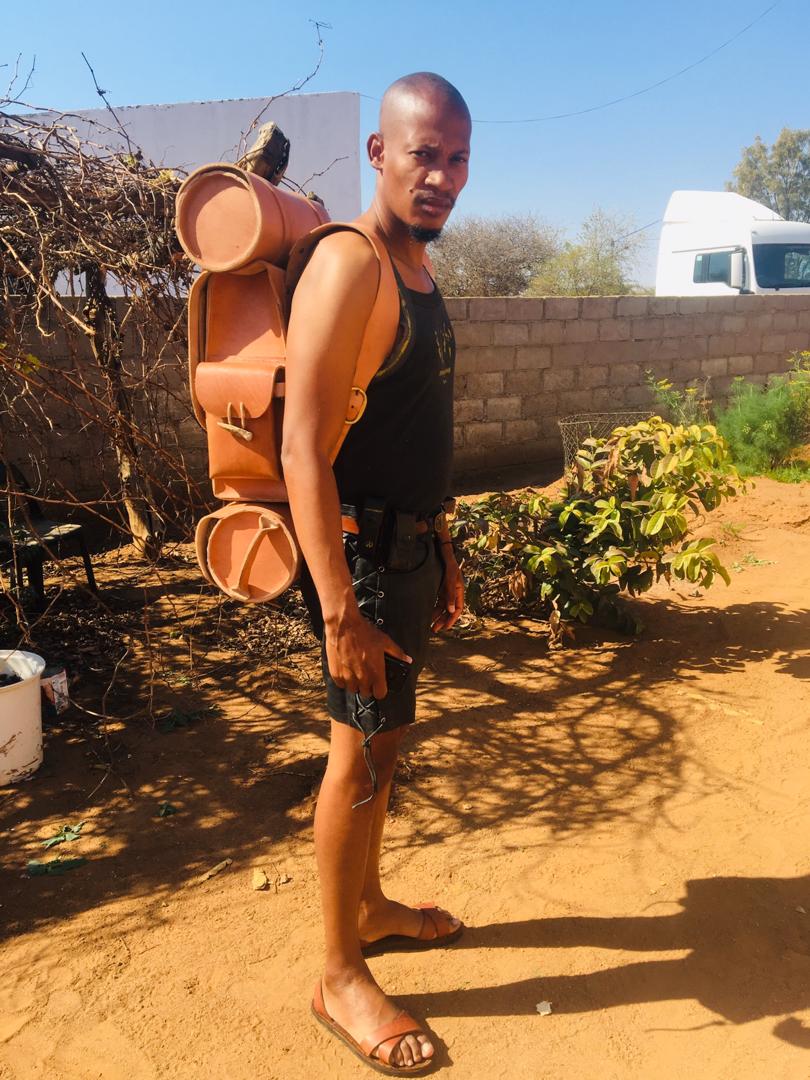
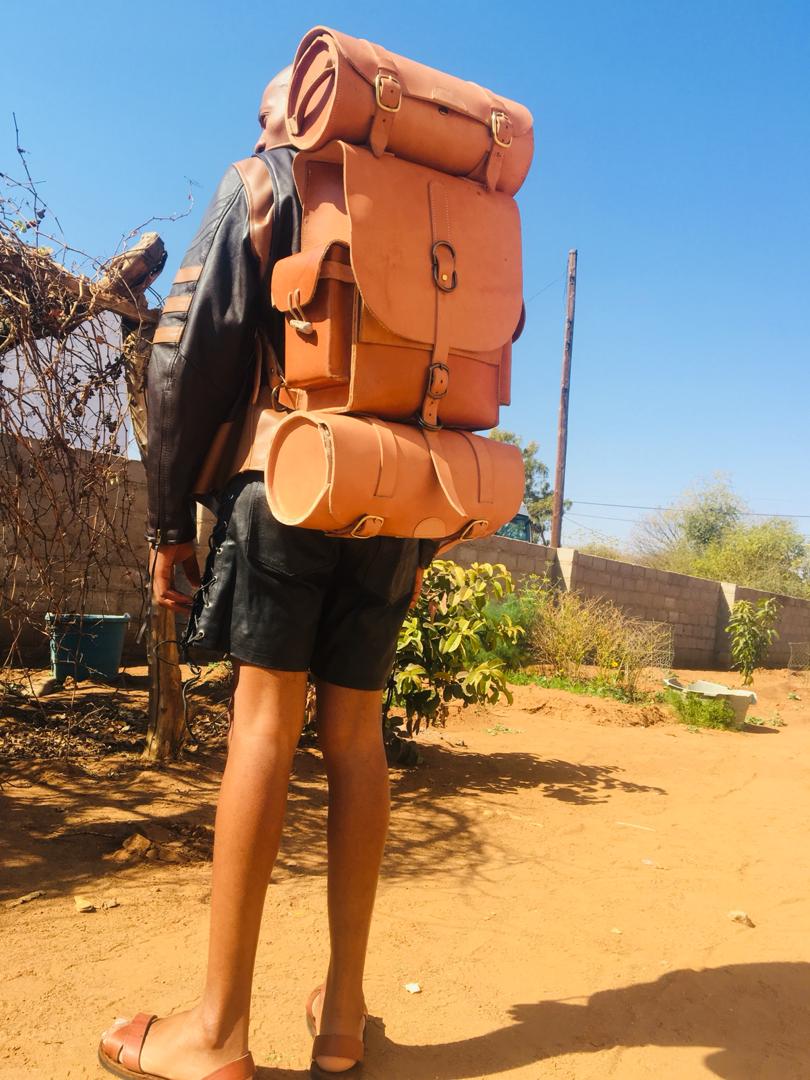
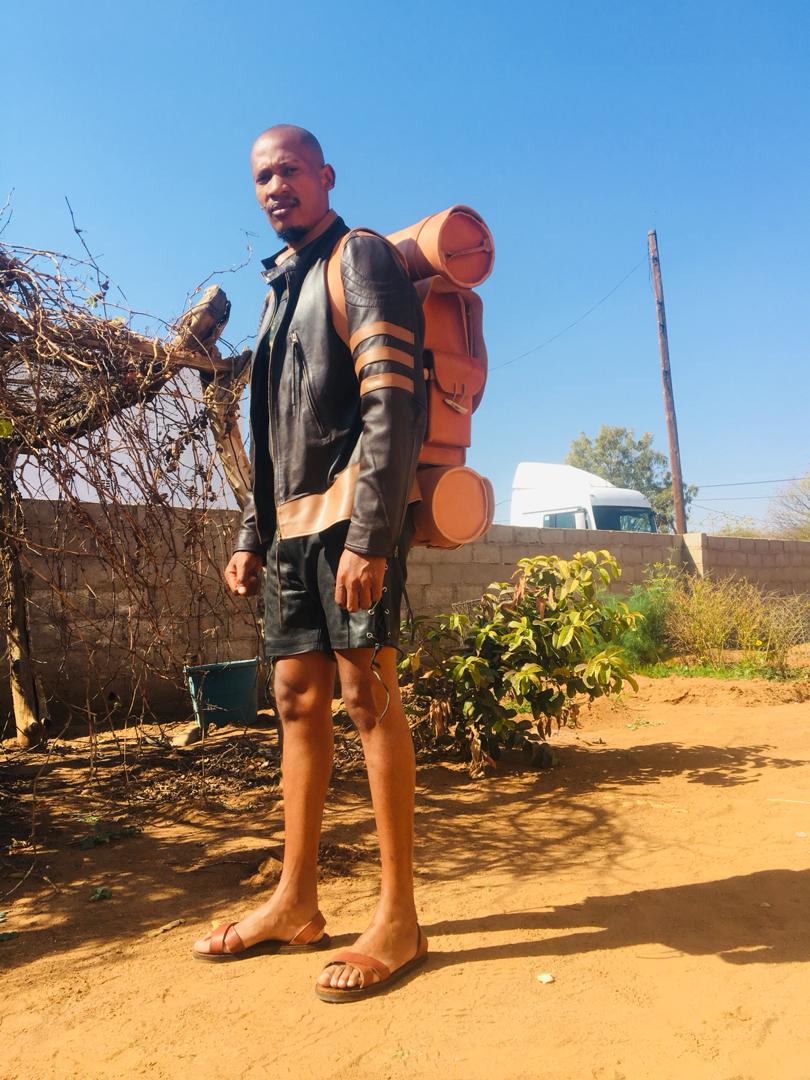
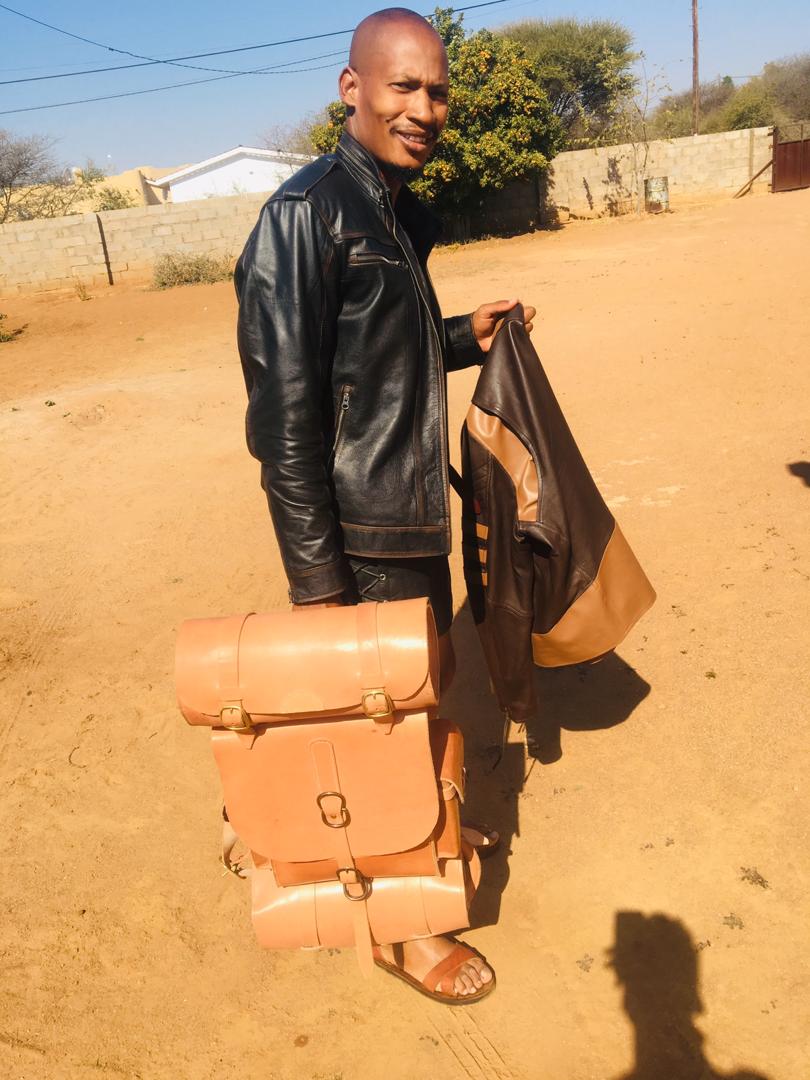
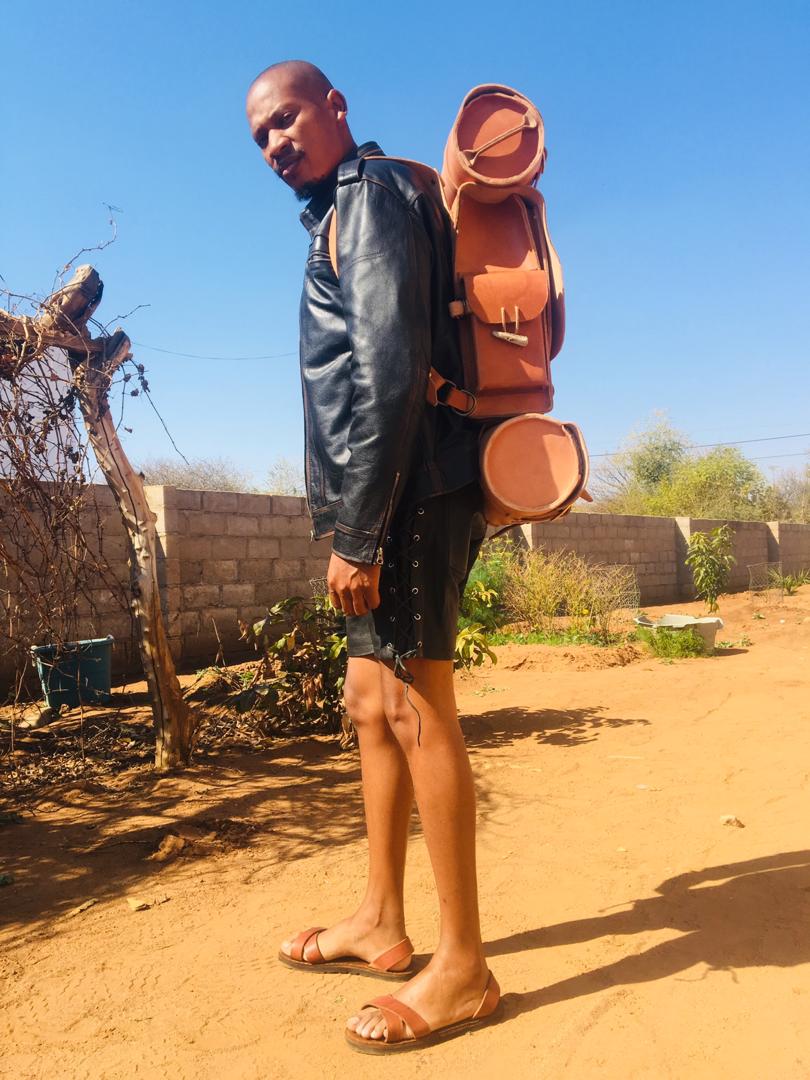
One of the better things about modern communication is the ability to meet and talk to people from nearly all parts of the globe. I have been in communication with Jacob from Botswana for years now and he has shared some photos of the beautiful backpack he made based on my earlier design. That one now resides in Montana and I hope serves some function for its owner. My personal pack has since been replaced by this one and is my new favorite piece of gear. But enough about me.
Right now, according to Google Maps, I am about 13,670 km (8,494 mi) from central Botswana and am unlikely to ever make it there, though not for lack of wanting to. However, the internet allowed us to connect across a vast distance in space and share ideas with strangers who have common interests.
Anyway, here is Jacob’s very own leather rucksack and the two portmanteaus inspired by this post to carry his gear into the bush of southern Africa. I suspect a backpack like this will outlive us all and become a fine heirloom to pass on to the next generation. Thank you so much for sharing these Jacob. I hope it serves you well for many years.
















 Preindustrial Craftsmanship